
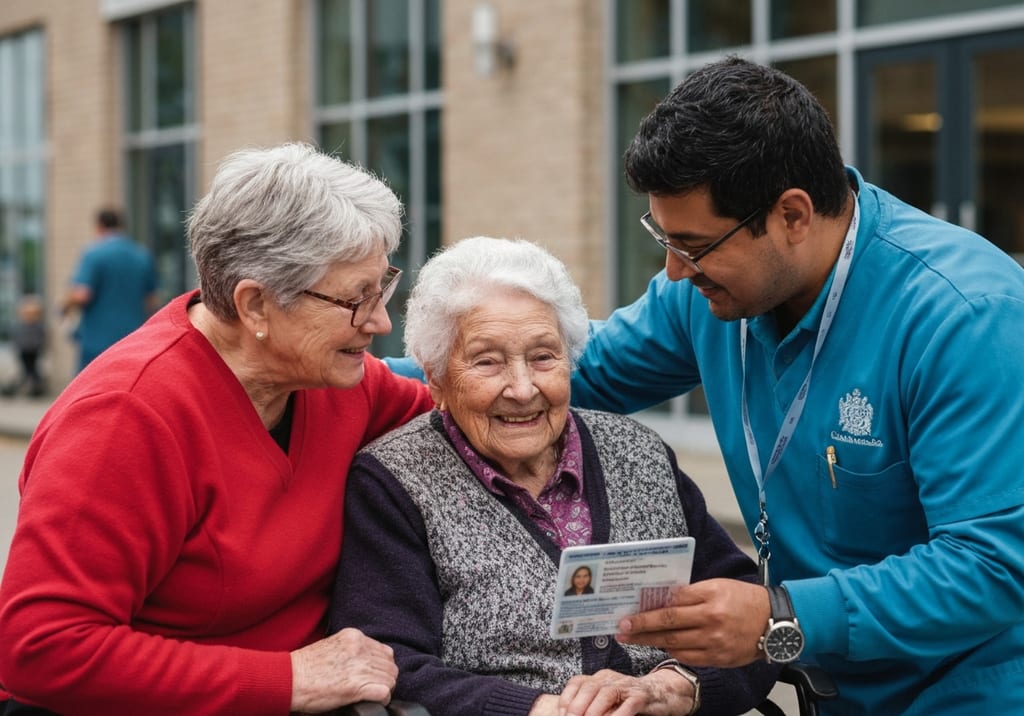
Bringing your spouse and kids as a caregiver
The Canada caregiver program offers foreign workers the chance to work in Canada and potentially apply for permanent residence later on. A key benefit of this program is that it allows caregivers to bring their family members to Canada, including spouses and dependent children. This article will explore the process of bringing family members to Canada as a caregiver, covering the requirements and application process for work permits and study permits.
bringing family members to canada
As a caregiver in Canada, you may be able to bring your spouse and dependent children with you. To be eligible, you need to meet the program's requirements, which include having a valid job offer from a Canadian employer and meeting the language and education requirements. You also need to show that you have enough financial resources to support your family members in Canada. For instance, you'll need to demonstrate that you can provide for their basic needs, such as housing, food, and healthcare.
applying for work and study permits
To bring your family members to Canada, you'll need to apply for a work permit or study permit on their behalf. The application process involves submitting an application to Immigration, Refugees and Citizenship Canada (IRCC), along with supporting documents like proof of relationship, language proficiency, and financial resources. You can find more information on the application process and requirements on the IRCC website. It's worth noting that the application process can be complex, so it's a good idea to carefully review the requirements and gather all the necessary documents before submitting your application.
work permits for caregivers' spouses
Spouses of caregivers in Canada may be eligible for an open work permit, which allows them to work for any employer in Canada, except for those who are ineligible due to reasons like fraud or exploitation. To apply for an open work permit, you'll need to submit an application to IRCC, along with supporting documents like proof of relationship and language proficiency. More information on the application process and requirements can be found on the Work Permit page. For example, you can find details on the required documents, processing times, and fees associated with the application.
study permits for dependent children
Dependent children of caregivers in Canada may be eligible for a study permit, which allows them to study at a Canadian educational institution, such as a school or university. To apply for a study permit, you'll need to submit an application to IRCC, along with supporting documents like proof of relationship, language proficiency, and financial resources. More information on the application process and requirements can be found on the Study Permit page. It's worth noting that study permits can be issued for the duration of the study program, and dependent children may be able to work part-time while studying.
recent policy changes
Recent policy changes have affected the Canada caregiver program and its requirements. For example, caregivers now need to have at least two years of full-time work experience in Canada to be eligible for permanent residence. The program has also introduced new language and education requirements for caregivers. You can find more information on these changes and how they impact caregivers and their families on the IRCC website or by visiting the Caregiver Pathways page. These changes aim to ensure that caregivers have the necessary skills and experience to succeed in Canada and contribute to the country's economy.
navigating the application process
Bringing family members to Canada as a caregiver can be a complex process, but it's possible with the right guidance and support. Caregivers should carefully review the requirements and application process for work permits and study permits to ensure that their family members can join them in Canada. For more information on the Canada caregiver program and its requirements, you can visit the IRCC website or consult with a Regulated Canadian Immigration Consultant (RCIC). Additionally, you can find more information on Provincial Nominee Programs and Family Sponsorship on our website.
Official current rules are at canada.ca/immigration; this guide is independent reference content.