
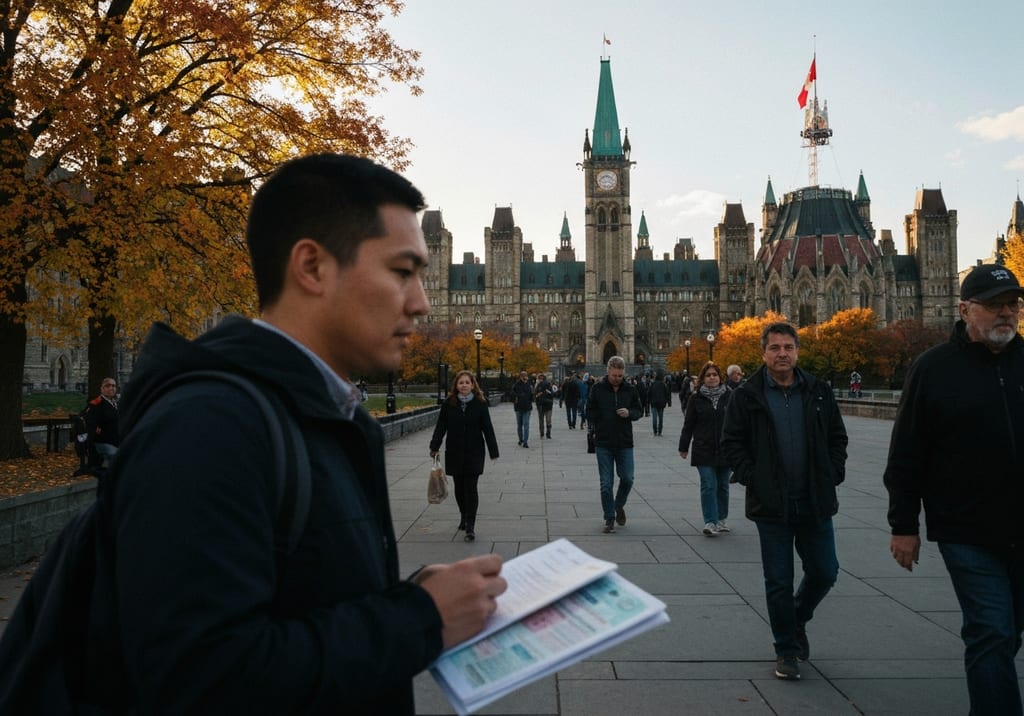
Nearly one in six Woonsocket residents may already be Canadian citizens
The city of Woonsocket, Rhode Island, has a rich history of French-Canadian immigration, with many residents descended from Quebecois migrants who arrived in the area in the 19th and early 20th centuries. According to the Woonsocket Historical Society, by 1900, the city's French-Canadian population made up approximately 60% of the city's population, and by 1930, this number had climbed to roughly 70%. This legacy has been recognized by the Canadian government, which has recently introduced a new law allowing individuals born outside Canada to claim citizenship if they can trace a direct line to a Canadian ancestor.
The new law, Bill C-3, took effect on December 15, 2025, and removes the first-generation limit on Canadian citizenship by descent. This means that individuals born outside Canada can now claim citizenship if they have a Canadian ancestor, regardless of how many generations removed they are. For Woonsocket residents with French-Canadian ancestry, this new law presents an opportunity to connect with their heritage and gain citizenship in Canada. I've spoken to several residents who are excited about the possibility of claiming their Canadian citizenship, and it's clear that this new law has the potential to make a significant impact on the community.
applying for canadian citizenship by descent
To apply for Canadian citizenship by descent, individuals must be able to demonstrate a direct line of descent from a Canadian ancestor. This typically involves gathering documents such as birth certificates, baptismal records, marriage certificates, and death certificates for every generation in between. The application process can be complex, and it's recommended that individuals seek the assistance of a Regulated Canadian Immigration Consultant (RCIC) or a licensed Canadian lawyer. For example, I've heard that some residents have had success working with consultants who specialize in French-Canadian ancestry, and it's worth considering this option if you're unsure about how to navigate the process.
benefits of canadian citizenship
Having Canadian citizenship can provide a range of benefits, including the right to live and work in Canada permanently, the right to vote in Canadian elections, and access to Canadian healthcare and education systems. For Woonsocket residents who are eligible for citizenship, this can be a valuable opportunity to connect with their heritage and gain a new perspective on their identity. One resident I spoke to mentioned that she's excited about the possibility of being able to work in Canada, and it's clear that this benefit alone could make a significant difference in the lives of many Woonsocket residents.
whats next for woonsocket residents
For Woonsocket residents who are interested in exploring their eligibility for Canadian citizenship by descent, the first step is to gather information about their family history and ancestry. The American-French Genealogical Society, located in Woonsocket, is a valuable resource for individuals researching their French-Canadian ancestry. The society has an extensive collection of vital records, family genealogies, and historical material focused on French-Canadian descent, which can be a helpful starting point for individuals looking to trace their lineage. In addition to researching their family history, individuals can also consult with a Regulated Canadian Immigration Consultant (RCIC) or a licensed Canadian lawyer to determine their eligibility for citizenship and to guide them through the application process.
For more information on Canadian immigration and citizenship, visit the Immigration, Refugees and Citizenship Canada website or consult with a Regulated Canadian Immigration Consultant (RCIC) or a licensed Canadian lawyer. You can also check out our other articles on Express Entry, family sponsorship, and news for more information on Canadian immigration.
Official current rules are at canada.ca/immigration; this guide is independent reference content.
Original reporting: CIC News