
How to Get a Provincial Nomination as a Physician in 2026
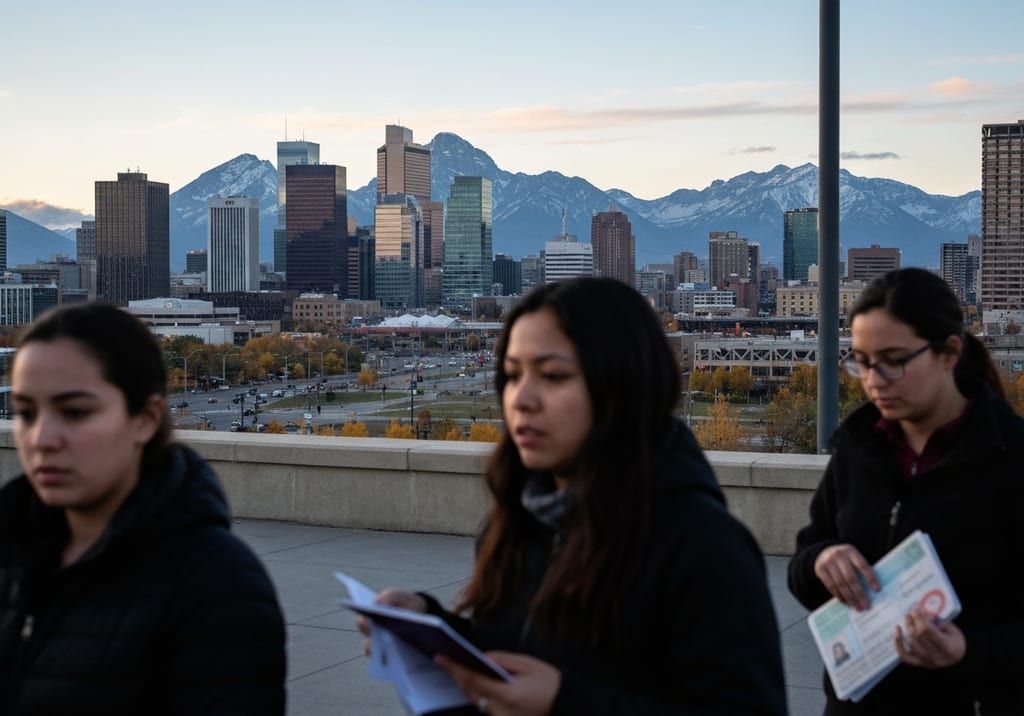
If you trained as a doctor outside Canada and want to build a career here, the provincial route deserves your attention early. Most provinces run their own immigration streams, known collectively as the Provincial Nominee Program (PNP), and many of them have a lane built specifically for physicians and other health workers. A provincial nomination does two useful things for a doctor at once: it puts you on a path toward permanent residence, and it can unlock much faster processing on a temporary work permit so you can start seeing patients while your PR application works its way through the queue.
The key thing to hold onto throughout is that a work permit and permanent residence are two different things. A nomination helps with both, but they run on separate tracks and separate timelines.
Why a nomination matters for doctors
There are two payoffs, and it helps to keep them apart.
A route to permanent residence. A provincial nomination is one of the strongest assets in Canada's immigration system. It can serve as the basis for a direct provincial PR application, or add substantial points if you go through Express Entry. For 2026, Ottawa expanded the Provincial Nominee Program considerably, with the admissions target rising from about 55,000 in 2025 to 91,500 in 2026. On December 8, 2025, the federal government also set aside roughly 5,000 additional PR spaces for provinces and territories to nominate licensed doctors who hold a job offer, on top of the regular PNP allocations. The exact year-by-year split of those 5,000 spaces has not been spelled out, so treat any precise breakdown with caution.
Faster processing on a work permit. A provincial nomination, or an official support letter from a province, is also one of the conditions for the 14-day work permit measure. Doctors working in one of three eligible occupations may qualify for 14-day processing on their work permit application. This is a work permit speed-up, not permanent residence. There is no such thing as a "14-day PR." The permit simply lets you begin working in Canada while your separate PR application runs on its normal timeline of several months.
The three eligible occupations (NOC 2021 codes) are:
- 31100 — Specialists in clinical and laboratory medicine
- 31101 — Specialists in surgery
- 31102 — General practitioners and family physicians
What provincial physician streams look like
Because health care is delivered at the provincial level, each province designs its own physician or health-worker stream, and the details vary from one to the next. Rather than trusting any single summary, always confirm the current rules on the province's own website before you apply.
In general terms, a physician stream tends to:
- target the three physician occupations above, and sometimes a wider set of health roles
- require a genuine job offer or a practice opportunity from a provincial employer or health authority
- ask for proof that you are licensed, or eligible to be licensed, to practise in that province
- sometimes attach a return-of-service commitment, where you agree to work in a specific region for a set period
Several provinces have run physician or health-focused nominee pathways, and reporting through 2026 pointed to provinces such as Ontario, British Columbia and Saskatchewan refreshing their health streams. These programs change often, including their names, eligibility rules and whether they are currently open, so check each province's official page rather than relying on secondhand descriptions.
The employer's role
For most physician streams, and for the 14-day work permit, a job offer is the anchor. You generally need a full-time, non-seasonal offer in one of the three physician occupations, from an employer willing to complete the immigration paperwork.
For the 14-day work permit specifically, the documented conditions include applying online and providing:
- a PNP nomination or support letter
- upfront medical exam results
- an employment contract and offer-of-employment number
- LMIA-exemption code T13 and proof the employer paid the compliance fee
- certified translations, biometrics within two weeks, and the applicable fees (work permit $155, biometrics from $85)
Your "employer" here can be a hospital, a health authority, a clinic, or in some cases a community that is actively recruiting physicians. The point is that a Canadian party has to offer you the role and take on the employer-side obligations.
How nomination, work permit and PR fit together
Here is the shape of the journey for a doctor still living abroad:
- Secure a qualifying job offer from a provincial employer.
- Apply for and receive a provincial nomination, or a support letter, through that province's physician or health stream.
- If you qualify, use that nomination to apply for the 14-day work permit so you can start working.
- Separately, pursue permanent residence, either through the province's PR process or through Express Entry, where a nomination adds significant points.
Keep the two tracks distinct. The work permit lets you work now; PR is decided later on its own timeline. One does not automatically turn into the other.
There is also a newer Express Entry category, "Physicians with Canadian work experience," with invitations beginning in early 2026. It requires at least 12 months of continuous physician work experience in Canada within the previous three years, so it is aimed at doctors already working here rather than at applicants still overseas. That caveat is exactly why the nomination-plus-work-permit combination matters so much: for many internationally trained doctors, it is how you gain that first stretch of Canadian experience in the first place.
Licensing is a separate hurdle
This is the part that surprises people, so it is worth stating plainly. Immigration status and a medical licence are two different things. A work permit or PR gives you the right to live and work in Canada. It does not give you the right to practise medicine.
Licensing is controlled by each province's medical regulator, and internationally trained doctors, known as international medical graduates (IMGs), typically move through steps such as:
- source verification of your credentials via physiciansapply.ca
- an approved language test
- the Medical Council of Canada Qualifying Examination (MCCQE)
- the NAC Examination, an OSCE-style clinical assessment
From there, most doctors reach a licence by one of two routes: a residency position through CaRMS, which is limited and competitive, or a Practice-Ready Assessment, a roughly 12-week supervised assessment offered by nine provinces, mostly in family medicine and usually tied to a return-of-service agreement. Because final licensure is granted province by province, plan your immigration and your licensing in parallel. For most IMGs, licensing is the longer of the two.
First steps
- Confirm your occupation maps to one of the three physician NOC codes.
- Start credential verification early through physiciansapply.ca.
- Research the provinces where you would be willing to work, and read each one's current physician or health nominee stream on its official site.
- Look for a job offer or practice opportunity with a hospital, clinic or health authority.
- Once you have an offer and a nomination, check whether you qualify for the 14-day work permit and gather the documents.
- Consider getting advice from an authorized representative before you file anything.
This is general information, not legal advice — for your situation, consult an authorized immigration representative (an RCIC or a Canadian immigration lawyer).