
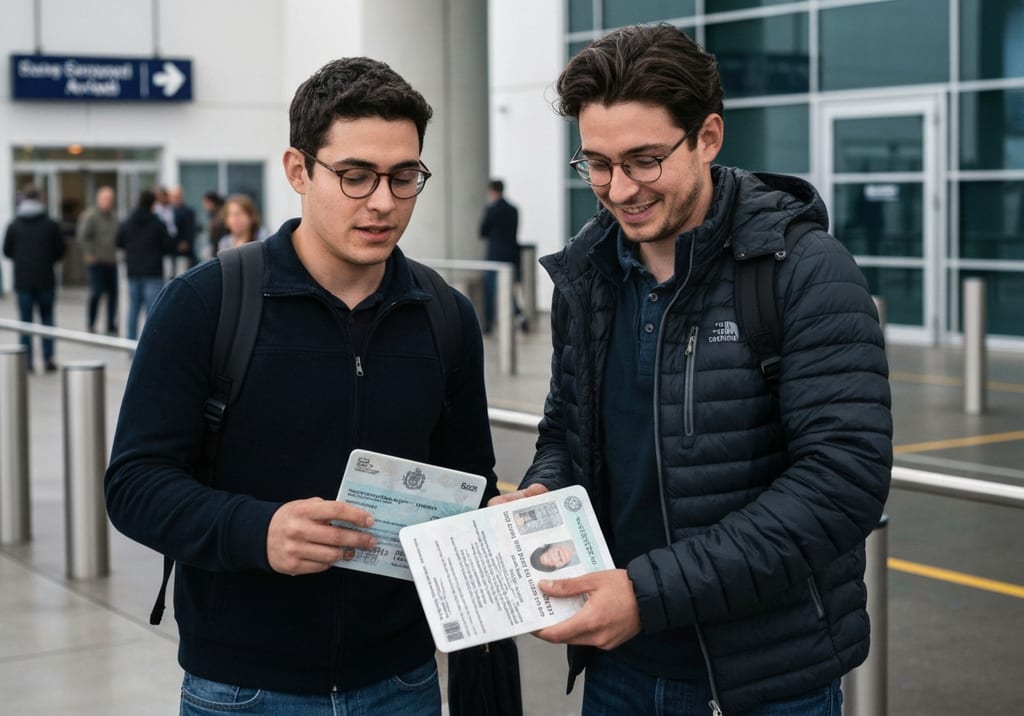
Visiting family in Canada for the 2026 World Cup: visa vs Super Visa
Families planning to reunite in Canada during the FIFA World Cup 2026 face a unique logistical puzzle. Balancing stadium schedules in Vancouver or Toronto with long-awaited family visits requires choosing the right entry pathway well before kickoff. For many relatives, the decision comes down to a standard visitor visa or the specialized Parent and Grandparent Super Visa.
Because hundreds of thousands of soccer fans will head to Canada in 2026, immigration processing queues are expected to grow. Understanding the differences between these entry pathways can make the difference between sitting in the stands with family or missing the tournament entirely.
The tournament matches will run through June and July of 2026, with games held at BC Place in Vancouver and BMO Field in Toronto. Because these cities will experience massive crowds, high hotel rates, and heavy transit congestion, many international visitors plan to stay with their Canadian-based family members to save on costs. This makes securing the correct visa status early a critical step in trip preparation.
Understanding your entry options for the 2026 tournament
Canada offers different entry options depending on who is visiting, how long they plan to stay, and their country of citizenship. When comparing the Super Visa vs Visitor Visa for parents and grandparents, the primary differences lie in the allowed length of stay and the eligibility criteria.
A standard visitor visa is designed for short-term tourism, business, or family visits. It is open to any traveler who meets the basic entry requirements. The Super Visa, by contrast, is a dedicated pathway reserved exclusively for the parents and grandparents of Canadian citizens or permanent residents. It allows eligible older relatives to stay in Canada for up to five years at a time without needing to renew their status.
Choosing between them depends on the scope of the trip. If a relative is coming solely to watch a few matches and return home within a few weeks, a standard visitor visa or Electronic Travel Authorization (eTA) is usually the most straightforward route. If the family plans to use the tournament as a springboard for a multi-year stay to help raise grandchildren or spend extended time in Canada, the Super Visa is the better fit.
For families hosting elderly parents, the Super Visa also reduces the stress of having to apply for status extensions every six months, which is a common headache with standard visitor status.
Standard visitor visas and eTAs work best for short tournament trips
For siblings, cousins, friends, or parents who only want a short trip, the standard temporary resident pathway is the default choice. Canada divides travelers into two main categories: those who need an eTA and those who need a Temporary Resident Visa (TRV), commonly called a visitor visa.
Citizens of countries that do not require a visa to enter Canada must apply for an eTA if they are arriving by air. This is a quick online process, but it must be completed before boarding a flight. By contrast, citizens of other countries must apply for a full visitor visa. This process requires submitting biometrics, travel history, and proof of financial support.
Because rules vary by passport, applicants should use the official Canada visa requirements tool to confirm what they need. For example, some travelers may find specific regional guides helpful, such as the guide for Vietnam fans: visa or eTA to enter Canada for the 2026 World Cup.
Applying for a Temporary Resident Visa requires planning for administrative delays. In my experience, waiting until early 2026 to apply is a massive gamble. IRCC backlogs during major international events can easily stretch to four or six months, meaning an application submitted late could still be sitting in a queue when the opening whistle blows.
A standard visitor visa typically allows stays of up to six months. While it is easier to apply for than a Super Visa, it does not offer the long-term flexibility that older relatives often want when visiting children and grandchildren.
The parent and grandparent super visa offers a longer-term option
If the visiting relatives are parents or grandparents of a Canadian citizen or permanent resident, they may qualify for the Super Visa. This option is highly attractive for families who want to combine the excitement of the World Cup with an extended stay. The Super Visa is a multi-entry visa valid for up to 10 years. Its main benefit is that it allows the holder to stay in Canada for up to five years per entry, compared to the six-month limit of a standard visitor visa. However, the application process is more rigorous and requires the host in Canada to meet specific financial thresholds.
To secure a Super Visa, the applicant and their host must satisfy several strict requirements. First, the child or grandchild in Canada must provide a signed invitation letter promising financial support for the duration of the visit. The host must also prove their household income meets or exceeds the Low Income Cut-Off (LICO) for their family size. This threshold changes annually, so hosts must review the latest tax year assessments to ensure they qualify.
Additionally, the applicant must purchase valid Canadian medical insurance. This is a major safeguard for the Canadian healthcare system, ensuring that emergency medical costs do not fall on Canadian taxpayers. Families can review the updated Super Visa medical insurance requirements 2026 to understand coverage minimums and payment options.
The upfront cost of this insurance can be steep, often running into thousands of dollars for older relatives, though some providers offer monthly installment plans. Finally, the parent or grandparent must undergo an immigration medical exam performed by an IRCC-approved panel physician.
The Super Visa requires more preparation and a higher upfront financial commitment than a standard visitor visa, but it provides unparalleled peace of mind for families planning multi-year stays.
Why holding a match ticket does not guarantee entry at the border
A common misconception among sports fans is that holding a ticket to a major event like the World Cup guarantees visa approval or smooth entry at the border. This is not the case. Immigration, Refugees, and Citizenship Canada (IRCC) and the Canada Border Services Agency (CBSA) treat World Cup ticket holders like any other temporary visitors. A match ticket does not bypass standard security screening, financial checks, or tie-to-home-country requirements.
When applying for a visitor visa, applicants must still prove they intend to leave Canada at the end of their authorized stay. Officers look for strong ties to the home country, such as employment, property ownership, or immediate family members who are not traveling.
At the border, CBSA officers have the final say on entry. Travelers must be prepared to show their return tickets, proof of lodging, and sufficient funds. Detailed planning is essential, and fans should review what is required for travelling to Canada with a 2026 World Cup match ticket to avoid being turned away. Knowing what to carry at the Canada border as a World Cup fan is just as important as securing the match tickets themselves.
If a border officer suspects that a traveler intends to overstay or work illegally, they can and will issue an expedited removal order. Carrying printed documentation of your itinerary, proof of your host's address, and evidence of ties to your home country is the safest way to avoid issues at the port of entry.
Can a Canadian host add a visiting relative to their own immigration status?
Another frequent point of confusion is whether a host in Canada can "add" a visiting relative to their own immigration status to simplify entry.
A host cannot add a visitor to their study permit, work permit, or permanent residency status. Every visitor is considered an independent applicant. They must apply for their own visa or eTA and qualify based on their own personal and financial circumstances.
Even if a host is a citizen or permanent resident, they cannot grant status to a visitor. The host's role is limited to providing supporting documents, such as an invitation letter or proof of income for a Super Visa.
This rule applies across all temporary entry pathways. For those considering other family milestones during the tournament, such as getting married in Canada during the World Cup: can you stay?, the same logic holds true. Entering as a visitor does not automatically change one's status, and official sponsorship processes must still be followed.
How Canadian family sponsorship policies in 2026 affect your plans
For families hoping to reunite permanently, the broader landscape of Canadian immigration is an important factor. Many families initially hope to use the Parents and Grandparents Program (PGP) for permanent residency.
However, permanent program options are highly competitive and subject to policy shifts. For instance, the recent decision where Canada shuts door to sponsoring parents and grandparents for permanent residence on a temporary basis has left many families looking for alternatives.
Because of these restrictions, the Super Visa has become the primary pathway for long-term family reunification. It bypasses the lottery system of the PGP while still allowing families to remain together for years.
For those who still hope to pursue permanent sponsorship when pathways reopen, understanding how to sponsor parents and grandparents (PGP) 2026 can help with long-term planning. In the meantime, the Super Visa remains the most reliable option for bringing parents and grandparents to Canada to share in the excitement of the 2026 World Cup.
To ensure a smooth trip, families should begin gathering documents, purchasing medical insurance, and submitting applications early in 2026. Waiting until the tournament is around the corner could result in processing delays that keep families apart during one of the biggest sporting events in Canadian history.
Official current rules are at canada.ca/immigration; this guide is independent reference content.