
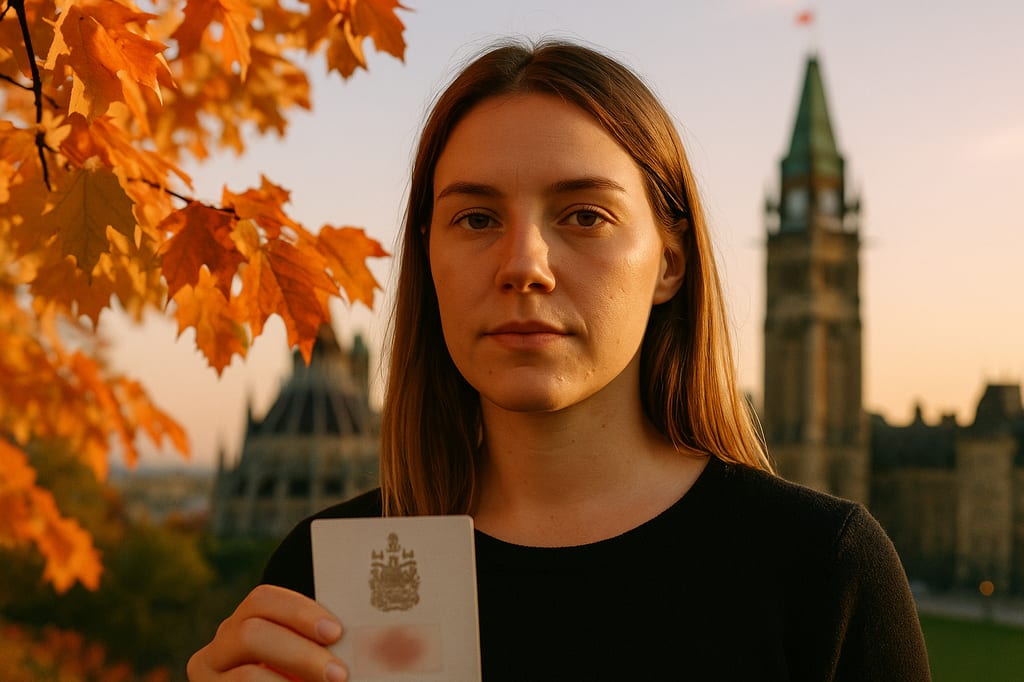
Your Canadian ancestry could be worth hundreds of thousands of dollars — here's how
Key takeaways
- Bill C-3 took effect December 15, 2025, eliminating Canada's first-generation citizenship limit and making thousands of Americans instant Canadian citizens by descent
- Nearly 2,500 Americans filed proof-of-citizenship applications in January 2026 alone, according to IRCC
- Financial benefits include avoiding $200,000+ citizenship-by-investment costs, saving ~$99,000 per child on university tuition at domestic rates, and gaining visa-free access to 182 countries
- Dual citizens gain unconditional rights to live, work, and own property in Canada without sponsorship or work permits
Since Bill C-3 came into effect on December 15, 2025, thousands of Americans have been rediscovering their Canadian ancestry. The bill eliminated Canada's first-generation limit on citizenship by descent, making anyone born before December 15, 2025, who can trace a continuous line of descent to a Canadian ancestor, a Canadian citizen — whether they knew it or not.
That means they are already Canadian citizens and can apply for proof of Canadian citizenship and, with it, a Canadian passport. Immigration, Refugees and Citizenship Canada reported nearly 2,500 Americans filed applications for proof of Canadian citizenship in January 2026 alone. For Americans now discovering they qualify, the question is: what do you actually get by applying?
The advantages are numerous, from the right to travel, live, and work in Canada permanently to access to a second passport and subsidized university tuition. They come with real financial perks that can exceed $200,000 per family.
What Bill C-3 changed for Americans with Canadian ancestry
Before December 15, 2025, Canada imposed a first-generation limit on citizenship by descent. If your parent was born in Canada, you were Canadian. If your grandparent was born in Canada but your parent was born outside Canada, you were not. Bill C-3 removed that cutoff entirely for anyone born before the law took effect.
The result: millions of Americans who had a Canadian grandparent, great-grandparent, or even more distant ancestor in their direct line suddenly became Canadian citizens retroactively. Actor Josh Duhamel became one of the most visible examples when he formalized his Canadian citizenship in December 2025, but he is far from alone.
The law does not require you to have ever lived in Canada, spoken to Canadian officials, or filed any paperwork before December 2025. If you meet the ancestry test, you are a citizen. The proof-of-citizenship certificate is just the documentation that confirms what is already legally true.
Worth flagging: the December 15, 2025, cutoff means children born after that date to a Canadian citizen parent who was also born outside Canada do not automatically inherit citizenship. The first-generation limit still applies to births after the law took effect. But for the millions born before that date, the door is open.
How much Canadian citizenship by descent saves compared to citizenship-by-investment programs
In an era of geopolitical uncertainty, the demand for second citizenships has never been higher. Americans who cannot trace Canadian ancestry but want a comparable Plan B face a very different price list.
Dominica's Citizenship by Investment program, one of the most affordable in the Caribbean, requires a minimum non-refundable contribution of $200,000 to the Economic Diversification Fund. Portugal's Golden Visa — the European entry point most discussed in the American press — requires an approximately $558,000 fund investment. Under Portugal's updated Nationality Law, which took effect in 2026, the pathway to Portuguese citizenship now requires roughly ten years of legal residency.
For Americans with Canadian ancestry, none of those costs apply. The major expenses are legal and genealogical costs to build a strong application, a one-time government application fee for a proof of citizenship certificate, and (once that's in hand) an application fee for a Canadian passport. Even with professional help, the total outlay is a fraction of what citizenship-by-investment programs charge.
The avoided cost of acquiring a comparable second citizenship — one that offers visa-free access to most of the world, the right to live and work in a G7 country, and a stable rule-of-law jurisdiction — is conservatively $200,000 and often much higher. That is real money saved simply by proving what is already legally true.
The financial value of a Canadian passport for dual citizens
Canada's passport currently grants visa-free or visa-on-arrival access to 182 destinations worldwide, ranking it among the ten most powerful passports on the planet and comfortably ahead of the U.S. passport, which covers approximately 179 destinations.
For dual citizens, the Canadian passport can be the smarter choice when visiting countries where Americans face stricter entry requirements, saving both visa fees and application time. The passport advantage extends well beyond casual travel.
Through Canada's International Experience Canada (IEC) program, young Canadian citizens between the ages of 18 and 35 (depending on their other country of citizenship) can live and work in countries across Europe and beyond on a working holiday permit — gaining international work experience that would otherwise require lengthy immigration processes. In other words, a Canadian passport offers young dual citizens international experience that is closed to Americans without sponsorship.
Unlike a Permanent Resident card, which can lapse if residency obligations are not met, or a work permit, which is tied to an employer, citizenship cannot be revoked for non-use. You could apply for your certificate today, tuck it away, and use it decades from now. For Americans who have felt political uncertainty impact their lives, this amounts to an irrevocable Plan B.
Many Americans who have been applying for proof of Canadian citizenship have no immediate intention of moving, but a desire for a backup passport, just in case of uncertainty. That citizenship also passes on to your children (if they are born before the first-generation limit applies), giving the next generation the same benefits and opportunities.
Subsidized university tuition: the $99,000 savings per child
Statistics Canada's most recent tuition survey, released September 10, 2025, priced a domestic undergraduate year in Canada at CA$7,734 on average. The international undergraduate equivalent: CA$41,746. The differential is CA$34,012 per year — approximately $24,800 at current exchange rates — and over a standard four-year degree, it compounds to CA$136,048, or roughly $99,000 per child.
For an American family with two children, the savings of attending a Canadian university at domestic rates rather than international rates reach close to $199,000 over eight academic years. A student could study in Toronto or Vancouver on a four-year program, return to the U.S. to begin a career, and pocket the difference.
The gap is also widening. A decade ago, international undergraduates in Canada paid 3.6 times what domestic students paid. In the 2025/2026 academic year, that ratio had grown. Canadian provinces set their own tuition policies, and several have allowed international fees to climb sharply while holding domestic tuition relatively flat.
Worth noting: the student must be enrolled and study in a Canadian institution to access domestic rates. The savings do not apply to online programs or U.S.-based study. But for families willing to send a child north for four years, the financial advantage is massive — and it stacks on top of the other benefits of dual citizenship.
Canada's international student cap has tightened competition for new arrivals on study permits, but Canadian citizens are exempt from the cap entirely. They apply as domestic students, with no attestation letter required and no risk of being squeezed out by the 155,000 annual limit.
Healthcare, Old Age Security, and other relocation benefits
The benefits above do not require relocation. You can hold a Canadian passport, send your children to Canadian universities, and never live in Canada full-time. But if you do choose to relocate, additional financial perks come into play.
Canadian citizens who establish residency qualify for provincial healthcare coverage after a waiting period (typically three months). That means access to physician visits, hospital care, and diagnostic services at no direct cost beyond what is already funded through taxes. For Americans accustomed to high-deductible health insurance, the contrast is sharp.
Old Age Security (OAS) is Canada's foundational public pension, available to Canadian citizens and legal residents who meet residency requirements. The benefit depends on years spent in Canada, among other factors, but dual citizens who relocate later in life and accumulate qualifying years can receive monthly payments in retirement.
The Canada Child Benefit provides tax-free monthly payments to families raising children under 18. For children under six, the maximum benefit is up to $7,997 per year; for children aged 6 to 17, up to $6,748 per year. The amounts are income-tested, but for middle-income families relocating with young children, the benefit can cover a significant portion of childcare or education costs.
These relocation benefits are not automatic — you must live in Canada and meet specific residency or income thresholds — but they are available to dual citizens in a way they are not to temporary residents or work permit holders. And unlike Express Entry applicants or Provincial Nominee Program candidates, dual citizens do not need to prove language scores, work experience, or employer sponsorship to access them. Citizenship is the only credential required.
Who qualifies and how to apply for proof of Canadian citizenship
If you were born before December 15, 2025, and can trace a continuous line of descent to a Canadian ancestor — parent, grandparent, great-grandparent, or further back — you are likely a Canadian citizen under Bill C-3. The law does not require you to have ever lived in Canada, visited Canada, or filed any paperwork before December 2025.
The proof-of-citizenship certificate is the document that confirms your status. It is not the citizenship itself — you already have that — but it is the credential you need to apply for a Canadian passport, register for healthcare, or prove your status to employers or universities.
The application requires genealogical documentation tracing your line to the Canadian ancestor. Birth certificates, marriage certificates, and naturalization records are the core documents. If your ancestor was born in Canada before vital statistics were centralized, you may need church records, census entries, or other historical documents. Professional genealogists and immigration lawyers who specialize in citizenship-by-descent cases can help assemble the proof.
IRCC processes proof-of-citizenship applications, and processing times vary depending on the complexity of the case and the volume of applications in the queue. As of June 2026, the department has not published updated processing estimates for the post-Bill C-3 surge, but applicants should expect delays given the January 2026 spike in filings.
Once you have the certificate, you can apply for a Canadian passport through the standard passport application process. The passport is valid for five or ten years, depending on the option you choose, and can be renewed indefinitely as long as your citizenship remains valid.
Worth emphasizing: this is not a discretionary immigration pathway. If you meet the ancestry test, you are a citizen. IRCC does not have the authority to deny your application based on ties to Canada, language ability, or intent to relocate. The only question is whether you can document the line of descent.
For Americans uncertain whether they qualify, the first step is to trace your family tree and identify the Canadian ancestor. If you find one, the financial benefits — avoided citizenship-by-investment costs, subsidized tuition, passport flexibility, and relocation options — can easily exceed $200,000 per family. That is real money, and it is available simply by proving what is already legally true.
Official current rules are at canada.ca; this guide is independent reference content.