
How to Get Proof of Canadian Citizenship
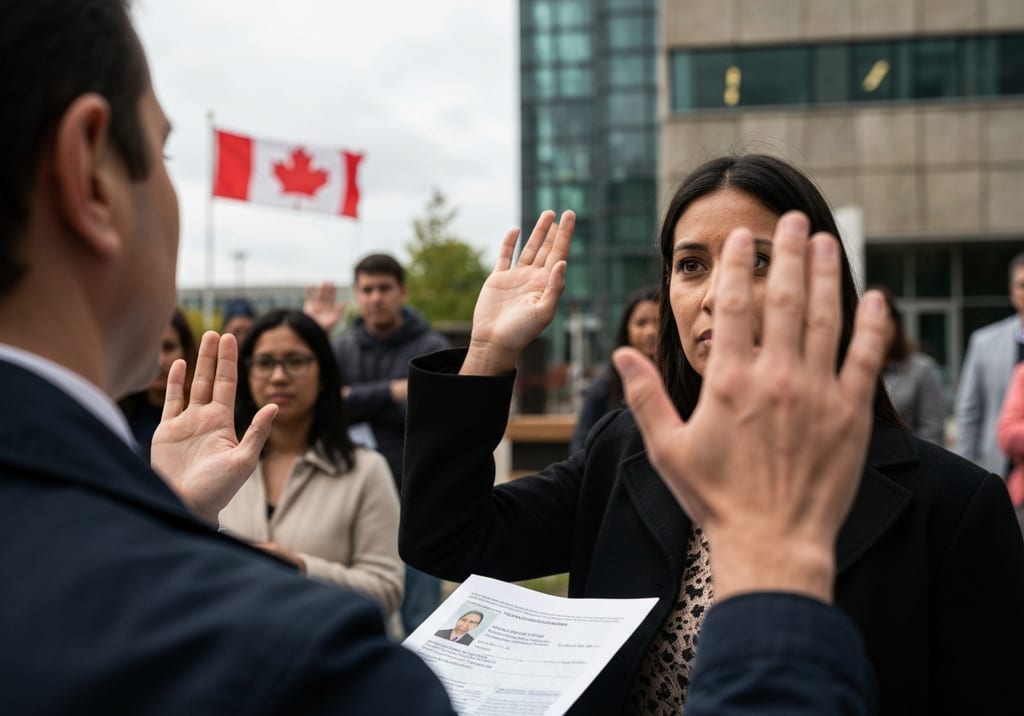
If you were born in Canada, you usually already have proof of your citizenship: your provincial or territorial birth certificate. But for many people, citizenship by birth or descent, naturalized citizens, and anyone who has lost an old document, the question of what officially counts as "proof" gets confusing fast. This guide walks through which documents prove Canadian citizenship, who needs to apply for one, and how the process actually works.
What counts as proof of Canadian citizenship
There are really only two documents the Government of Canada issues as official proof of citizenship:
- A citizenship certificate, issued by Immigration, Refugees and Citizenship Canada (IRCC). This is the standard proof for people who became citizens through naturalization, or who are citizens by descent (born abroad to a Canadian parent). Today it's issued as a wallet-sized card or an electronic version; older paper certificates are still valid.
- A provincial or territorial birth certificate, if you were born in Canada. This is issued by the province or territory where you were born, not by IRCC, and for most purposes it proves your citizenship on its own.
A few things people often assume are proof, but are not: a Canadian passport is not legal proof of citizenship (it can be a travel document for citizens, but it isn't the underlying proof), and neither is a permanent resident card, a record of landing, or a Certificate of Indian Status. If an institution asks for "proof of citizenship," they almost always mean a citizenship certificate or a Canadian birth certificate.
Who needs to apply for a citizenship certificate
You may need to apply for a citizenship certificate if any of these describe you:
- You were born outside Canada to a Canadian parent and have never been issued a certificate. You may already be a citizen by descent, but you need the certificate to prove it (for a first Canadian passport, for example).
- You're a naturalized citizen who has lost, never received, or damaged your certificate.
- You hold an old paper certificate and want the current card format, or you've legally changed your name and want the document updated.
- You're not sure whether you're a citizen and want IRCC to confirm your status on the record.
One important point: applying for a citizenship certificate is not the same as applying to become a citizen. The certificate is proof that you already are one. If you're a permanent resident hoping to naturalize, that's the separate citizenship application, which involves the physical-presence requirement (generally 1,095 days of physical presence in Canada within the five years before you apply), a test, and a ceremony. The certificate comes after that process, not instead of it.
How the application works, step by step
The proof-of-citizenship process is handled by IRCC and follows a fairly predictable path:
- Confirm you're eligible. Decide whether you're applying for a first certificate (you've never had one) or replacing/updating an existing one. The forms differ slightly.
- Gather your documents. Expect to provide identity documents, photos that meet IRCC's specifications, and evidence of the connection that makes you a citizen, for example, a parent's proof of Canadian citizenship if you're applying based on descent. Documents in another language usually need a certified translation.
- Pay the processing fee. A government processing fee applies. Fees change periodically, so confirm the current amount on the official IRCC website before you pay.
- Submit the application. Depending on the application type, this is done online or by mail. Follow the checklist exactly, since missing items are the most common cause of delays or returned applications.
- Wait for processing and respond to any requests. IRCC may ask for additional information. Processing times vary and shift over time, so check the current estimate on the official IRCC website rather than relying on what a friend experienced a few years ago.
- Receive your certificate. Once approved, your certificate is issued. Keep it somewhere safe, because replacing it means starting this process again.
Tips to avoid delays and common mistakes
A few practical things make this smoother:
- Don't let your photos or supporting documents go stale. Use the current photo specifications and make sure copies are clear and complete.
- Match names carefully. If your name appears differently across documents (marriage, divorce, legal change), include the paperwork that connects them.
- For citizenship by descent, check the rules first. Whether someone born abroad inherits citizenship can depend on which generation they're in and when they were born. If your situation is borderline, it's worth confirming on the official IRCC website before assuming you qualify.
- Apply before you need it. People often discover they lack proof only when they're applying for a passport or starting a new job. Because processing takes time, request the certificate well ahead of any deadline.
When in doubt, the official IRCC website is the authoritative source for current forms, fees, photo rules, and processing times, all of which change from time to time. Use this guide to understand the shape of the process, then confirm the live details there before you submit.