
The Canadian Citizenship Test: What to Expect
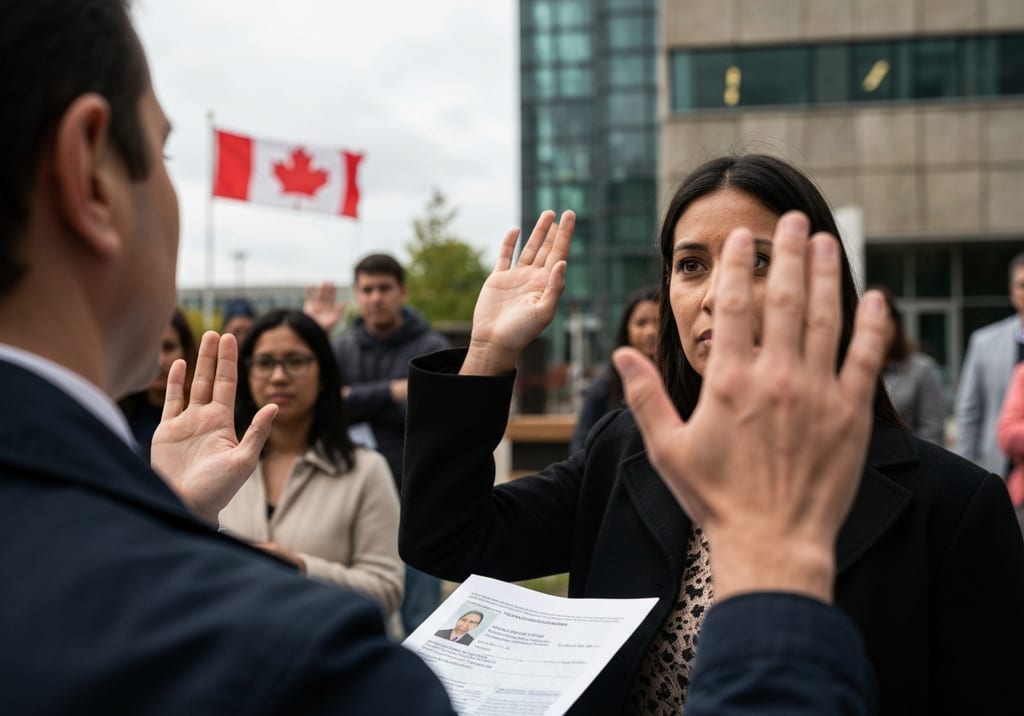
If you've applied to become a Canadian citizen, the citizenship test is one of the last big steps standing between you and your oath ceremony. It sounds intimidating, but for most people it's very manageable once you know how it works and how to prepare. Here's a clear walk-through of what the test actually is, who has to take it, and how to get ready.
What the citizenship test is and who takes it
The citizenship test checks that applicants understand the rights and responsibilities of being Canadian and have a basic grasp of the country's history, geography, government, laws, and symbols. It's based directly on the official study guide that IRCC publishes for this purpose, so everything you're tested on comes from that one source.
Not every applicant takes it. The test is generally required for adults applying for citizenship within a specific age range (historically those between 18 and 54 at the time of applying). Applicants who fall outside that range, including children included on a parent's application and older adults, usually don't have to take it. Because the exact age band can change, confirm whether the test applies to you on the official IRCC website before you start studying.
The test is one piece of becoming a citizen, not the whole thing. To be eligible in the first place, you generally need to be a permanent resident who has been physically present in Canada for at least 1,095 days within the five years before you apply, have met your tax-filing obligations for the required number of years, and prove adequate knowledge of English or French. The test sits alongside those requirements rather than replacing them.
What's on the test and how it's scored
The test is short. It's typically about 20 multiple-choice and true/false questions, and you usually need to answer a set proportion correctly to pass (historically around 75 percent, which works out to 15 out of 20). You're given a limited amount of time, often around 30 minutes, which is plenty if you've studied.
Questions are drawn from the official citizenship study guide and cover areas such as:
- Canadian history, including Indigenous peoples and major events
- The system of government, elections, and how laws are made
- The rights and responsibilities of citizenship
- Geography, regions, and provinces and territories
- National symbols, holidays, and notable figures
Some questions are national, and some relate to the province or territory where you live, so pay attention to the local sections of the guide. Read each question carefully, since true/false items in particular can hinge on a single word.
How the test is delivered and what happens on the day
After IRCC reviews your application and confirms you're eligible, you'll receive an invitation telling you when and how to take the test. Delivery has shifted over time between in-person testing at a local office and online testing you complete from home, so follow the specific instructions in your invitation rather than assuming a format.
If you test online, you'll usually need a reliable internet connection, a quiet space, and a device with a camera, and you'll go through an identity check beforehand. If you test in person, you'll bring your identification and original documents. Either way, make sure your ID matches the details on your application.
Around the same time as the test, an official may interview you. This is a normal part of the process, used to verify your documents, check your language ability, and go over your application. Treat the interview as seriously as the test and bring everything your invitation asks for.
If you don't pass, and final preparation tips
Not passing on the first try is not the end of the road. Applicants who don't reach the passing mark are normally given another opportunity, often a second written attempt or an interview with a citizenship official. If those attempts don't succeed, a hearing may be scheduled. The process is designed to give people a fair chance rather than to disqualify them quickly.
To prepare well:
- Study the current official guide, and only that guide. Older editions and unofficial summaries can contain outdated information.
- Use free practice questions to get comfortable with the format and to find your weak spots.
- Pay special attention to your own province or territory, since some questions are local.
- Brush up on the basics of your area's voting system and elected representatives.
- Rest before the test and read every question fully before answering.
The citizenship test rewards steady preparation more than cramming. Spend time with the official material, take a few practice runs, and confirm the current rules, age bands, and required documents on the official IRCC website, since these details are updated from time to time. Walk in prepared and the test becomes a formality on the way to your oath ceremony.