
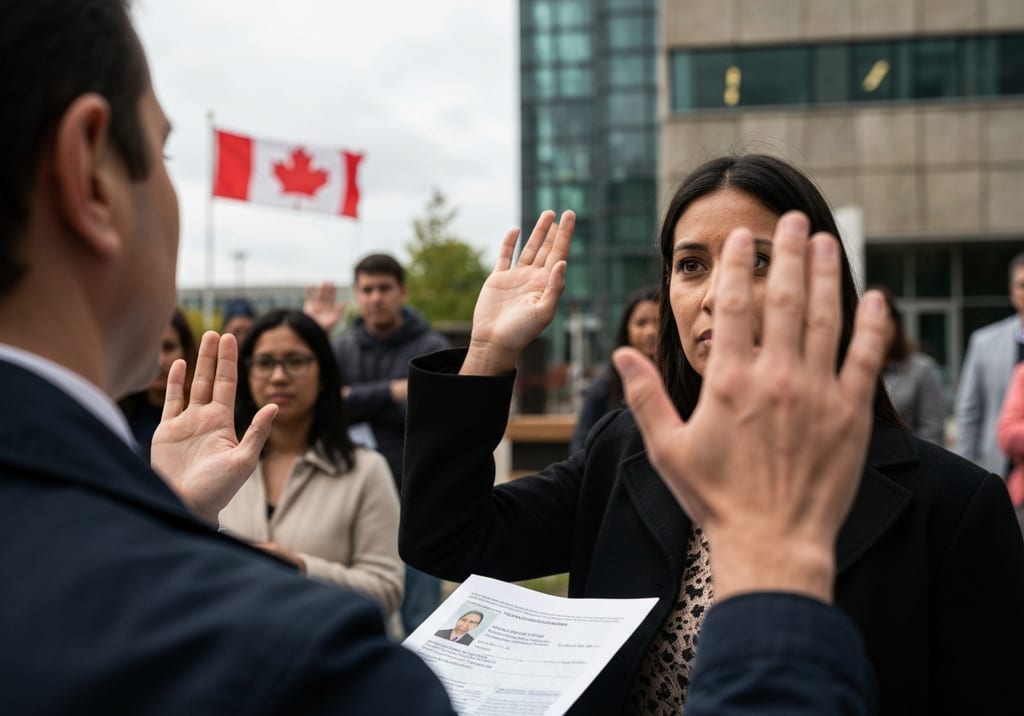
Citizenship Ceremony for Black History Month 2024: Recognizing Black Canadians
TL;DR — In February 2024, the Government of Canada marked Black History Month with a special citizenship ceremony that recognized the contributions of Black Canadians to Canadian society and welcomed new Black Canadians as citizens. The annual ceremony — held during February each year — celebrates Black heritage in Canada, the role of Black immigration in building modern Canada, and the diverse experiences of Black communities including Caribbean, African, and African-American descended Canadians. The ceremony is part of broader IRCC efforts to acknowledge the immigration histories that shape Canada.
What Black History Month means in Canada
Black History Month in Canada (every February) recognizes the contributions of Black Canadians, dating back centuries. The official recognition was established in 1995 by Parliament. The month celebrates :
- Black Canadian heritage — including the Black Loyalists, Africville, the Underground Railroad, and modern Black communities.
- Contributions of Black Canadians in arts, sports, science, business, politics, and community building.
- Black-Canadian immigration history — Caribbean immigration starting in the 1950s, African immigration accelerating from the 1980s, recent migration from Haiti, Sudan, Nigeria, and other African nations.
- Recognition of challenges — historical and continuing — faced by Black Canadians.
The February 2024 ceremony was held to formally welcome new Black Canadians during this month of recognition.
The 2024 ceremony
IRCC held a special citizenship ceremony during Black History Month featuring :
- Cultural elements acknowledging Black Canadian heritage.
- Recognition of Black Canadians being sworn in as new citizens.
- Speeches by community leaders, government officials, and citizenship judges.
- Performances highlighting Black Canadian arts.
Similar ceremonies are held annually in February.
Black-Canadian immigration history
18th-19th centuries
- Black Loyalists : about 3,500 Black Loyalists arrived in Nova Scotia after the American Revolution (1783-1785).
- Underground Railroad : refugees from American slavery escaped to Canada in the 19th century, settling primarily in southwestern Ontario.
- Africville : a Black community in Halifax (founded 1840s), unjustly demolished in the 1960s.
20th century
- Caribbean immigration : major waves in the 1950s-1970s after the Domestic Scheme and various immigration agreements.
- African immigration : accelerated from the 1980s onwards, with major source countries being Ghana, Nigeria, Ethiopia, Somalia, Kenya, Cameroon, Senegal, and others.
- Anti-Black racism awareness : grew significantly with the Civil Rights Movement (US) and parallel Canadian advocacy.
21st century
- Crisis-driven immigration : Haiti (after 2010 earthquake, 2024 gang crisis), Sudan, Eritrea.
- Refugee resettlement programs from various African nations.
- Special PR pathway under Guide 5991 : for Colombian, Haitian, and Venezuelan nationals.
- Continued African immigration under economic programs.
Black-Canadian source countries
Major immigration source countries with significant Black populations :
Caribbean
- Jamaica.
- Trinidad and Tobago (eta-conditional).
- Haiti (visa-required, with special humanitarian programs).
- Saint Lucia, Saint Vincent and the Grenadines (eta-conditional).
- Barbados (eta).
- Cuba.
- Dominican Republic.
Africa
- Nigeria : largest African source country (visa-required; SDS closed 2024).
- Ghana.
- Ethiopia.
- Somalia.
- Kenya.
- Cameroon : Francophone, eligible for IRCC's Mobilité Francophone.
- Senegal, Côte d'Ivoire, Mali, Burkina Faso : Francophone Africa.
- Sudan, Eritrea, South Sudan.
- Democratic Republic of the Congo, Republic of the Congo.
Other
- United States (descendants of enslaved Black Americans).
- United Kingdom (Caribbean and African diaspora).
Black-Canadian communities
Toronto-GTA
- The largest Black population in Canada.
- Major communities in North York, Scarborough, Brampton, Mississauga.
- Caribbean Caribana festival (largest in North America).
- Strong African community in Etobicoke and surrounding areas.
Montreal
- Major Caribbean (especially Haitian) community.
- Africa-francophone diaspora (Senegalese, Ivorian, Cameroonian, Congolese).
- Quebec's largest Black population.
Halifax-Dartmouth
- Historic Black Loyalist roots.
- Recent African immigration.
- Africville heritage.
Calgary, Edmonton, Vancouver
- Growing Black communities.
- Mix of African, Caribbean, and Black-American descended.
Ottawa
- Federal government employment attracts Black professionals.
- Bilingual francophone-Black community (especially from Francophone Africa).
Programs supporting Black-Canadian immigration
IRCC has several programs that affect Black-Canadian immigration :
Refugee resettlement
- Government-Assisted Refugees from East and Central Africa.
- Privately Sponsored Refugees from Black-Canadian communities.
- Blended Visa Office-Referred programs.
Express Entry
- French-language category-based draws : benefit candidates from Francophone Africa.
- Healthcare category : benefits African nurses, doctors, paramedicals.
- Skilled trades category : benefits African tradespeople.
Provincial Nominee Programs
- Various provinces have programs targeting Black-Canadian-relevant occupations.
- Atlantic Immigration Program has supported African immigration to Atlantic Canada.
Special programs
- Guide 5991 for Haitian nationals (humanitarian).
- Sudan crisis measures for affected populations.
- Special policies for Lebanese (which include some Black-Lebanese).
Mobilité Francophone
French-speaking African workers benefit significantly from this LMIA-exempt program.
Citizenship and Black Canadians
Black Canadians applying for citizenship follow the same process as all other applicants :
- 1,095 days physical presence in 5 years.
- 3 of 5 years tax filing.
- CLB 4 in English or French (18-54).
- Citizenship test (20 questions).
- Oath of Citizenship.
The process is uniform regardless of background.
Bill C-3 and Black Canadians
Bill C-3 (2025) restored citizenship to most descendants of Canadians born abroad. This impacts some Black Canadians whose ancestors had Canadian citizenship through historical residence or service. The substantial-connection test allows multiple-generation descent in many cases.
Key facts at a glance
- Black History Month : recognized in Canada since 1995.
- 2024 special ceremony : held during February to celebrate Black-Canadian heritage.
- Major source regions : Caribbean, Africa.
- Major Black-Canadian cities : Toronto, Montreal, Halifax, Calgary, Edmonton, Ottawa.
- Largest Black-Canadian communities : Toronto-GTA, then Montreal.
- Historical roots : Black Loyalists 1783-1785, Underground Railroad, Caribbean immigration 1950s-onwards, African immigration 1980s-onwards.
- Contemporary programs : Express Entry, PNP, Atlantic Immigration, Mobilité Francophone, refugee resettlement.
- Special programs : Guide 5991 for Haitians, crisis measures.
- Bill C-3 : restored citizenship to descendants.
Source attribution
This article rewrites public information published by Immigration, Refugees and Citizenship Canada at https://www.canada.ca/en/immigration-refugees-citizenship/news/2024/02/citizenship-ceremony-to-mark-black-history-month-2024.html. The original Government of Canada content is licensed under the Open Government Licence — Canada.
Verify on canada.ca
For more on Black History Month and Black-Canadian heritage : canada.ca/black-history-month.
IRCC.com is an independent news and information aggregator. We are not affiliated with the Government of Canada and do not provide immigration services or advice. For personalized help, contact a CICC-licensed RCIC or a Canadian immigration lawyer.