
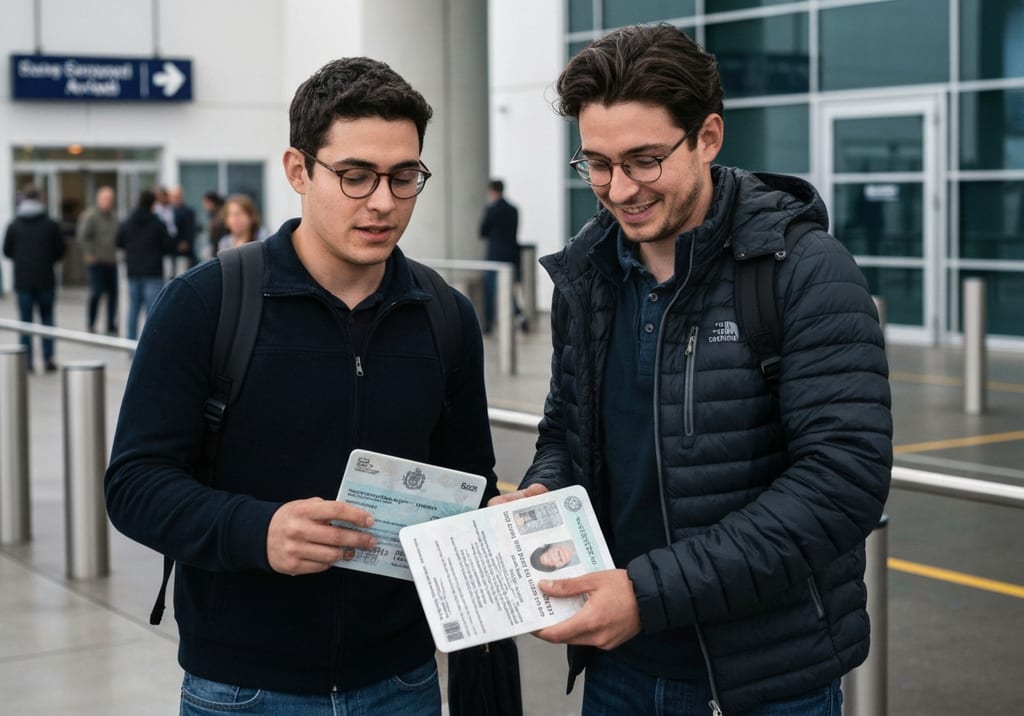
Canadian Family Sponsorship: Spouse, Children, Parents and Grandparents
TL;DR — Canadian citizens and permanent residents aged 18 or older can sponsor close family members for permanent residence in Canada: spouses and common-law/conjugal partners, dependent children, parents and grandparents (PGP), and a limited "orphaned" relative category. PGP sponsorship runs through an annual interest-to-sponsor draw that re-uses applications received in the 2020 intake while waiting for a new selection design. The Super Visa is a multi-entry alternative for parents and grandparents — 10-year validity, up to 5 years per visit, with private medical insurance and minimum-income requirements.
Who can be a sponsor
To sponsor a family member, the sponsor must:
- Be a Canadian citizen, permanent resident, or registered Indian under the Indian Act.
- Be 18 or older.
- Reside in Canada (PR sponsors must reside in Canada; Canadian-citizen sponsors abroad must demonstrate intention to return when the sponsored relative arrives).
- Sign a sponsorship undertaking to provide for the sponsored relative's basic needs.
- Not be in default on a previous sponsorship undertaking, immigration loan, or court-ordered support.
- Not be receiving social assistance (except for disability).
- Meet the Minimum Necessary Income (MNI) for parent/grandparent sponsorship (no MNI for spouse/child sponsorship).
- Not be prohibited from sponsoring because of certain criminal convictions.
Categories
Spouse, common-law partner, conjugal partner
The most common sponsorship. The relationship must be genuine and legally valid in the jurisdiction where the relationship was contracted (and recognized in Canada).
- Spouse: legally married, with the marriage recognized in Canada (cannot be polygamous; both must have been physically present at the wedding).
- Common-law partner: cohabited continuously for at least 12 months in a marriage-like relationship.
- Conjugal partner: in a marriage-like relationship for at least 12 months but unable to live together due to immigration barriers, country-of-origin laws, or persecution.
Two channels:
- Outland sponsorship (Family Class) — applicant outside Canada applies through the visa office serving their country.
- Inland sponsorship (Spouse or Common-Law Partner in Canada Class) — applicant inside Canada applying with valid temporary status; can apply for an open work permit (OWP) in the meantime under a longstanding pilot program.
Processing standard: ~12 months end-to-end for inland and outland.
No minimum-income requirement for spouse, partner, or dependent-child sponsorship.
Dependent children
A dependent child is:
- A biological or adopted child of the sponsor or the sponsor's spouse/partner.
- Under 22 and unmarried.
- Or 22 or older if dependent due to a physical or mental condition since before age 22.
Processing standard: ~12 months.
Parents and Grandparents (PGP)
The PGP program operates as an annual lottery (with a fixed yearly cap). Steps:
- Submit Interest-to-Sponsor form during the annual intake window.
- IRCC randomly selects a target number to be invited to apply (recent years used the existing 2020 pool of interest forms rather than opening a new intake).
- Selected sponsors submit a complete application within 60 days.
- Applicants must meet the Minimum Necessary Income (MNI) plus 30% for the past 3 tax years.
Processing standard for PGP: ~24 months. Eligibility caps shift each year — IRCC's 2025–2027 Levels Plan reduced PGP admissions.
Super Visa (alternative for parents and grandparents)
The Super Visa is a 10-year multiple-entry temporary-resident visa for parents and grandparents of Canadian citizens or permanent residents. Each visit can last up to 5 years (extended from the original 2 years per visit). Requirements:
- A signed letter of invitation from the host child or grandchild.
- Evidence the host meets the Low-Income Cut-Off (LICO) plus 30% based on family size.
- Private medical insurance from a Canadian insurer (recently expanded — see below) valid for at least 1 year, with at least CAD $100,000 in coverage.
- A medical exam of the parent or grandparent.
In 2024, IRCC expanded the list of accepted medical-insurance providers to include certain non-Canadian insurers approved by the Office of the Superintendent of Financial Institutions (OSFI), and clarified income calculations.
Other relatives (limited)
If a Canadian sponsor has no living spouse, common-law partner, dependent child, parent, or grandparent — and no living orphaned brother/sister/niece/nephew/grandchild under 18 — they may sponsor one other relative of any age (the "lonely Canadian" provision). In practice, this is rarely available because most sponsors have eligible relatives in higher categories.
Application steps
- Confirm eligibility of both sponsor and sponsored person.
- Compile documents: identity, relationship evidence (marriage certificate, photos, joint accounts), sponsor's tax records, sponsor's letter of intent.
- Apply online through the IRCC Portal (or paper for some PGP cases).
- Pay fees: sponsorship fee CAD $85 + processing fee CAD $545 + Right of Permanent Residence Fee (RPRF) CAD $575 = CAD $1,205 for spouse/partner; PGP fees similar plus dependents.
- Biometrics for the sponsored person (CAD $85 individual fee).
- Medical exam for the sponsored person.
- Police certificates for the sponsored person from every country where they lived 6+ months since age 18.
- Wait for processing — typically 12 months (spouse/child) or 24 months (PGP).
- Confirmation of Permanent Residence (COPR) and landing.
Processing times
IRCC publishes live processing-time estimates on canada.ca. As of 2026, typical estimates:
- Spouse/Common-law/Conjugal: ~12 months.
- Dependent child: ~12 months.
- PGP: ~24 months.
- Inland Spouse Open Work Permit: ~4 months.
Key facts at a glance
- Sponsor age: 18+.
- Spouse/child MNI: not required.
- PGP MNI: LICO + 30% for past 3 tax years.
- Super Visa: 10-year multi-entry, max 5-year stay, $100K medical insurance, host meets LICO+30%.
- Sponsor undertaking length: 3 years (spouse), 10 years (children under 22), 20 years (PGP).
- Spousal sponsorship fees: ~CAD $1,205.
- Application channel: online IRCC Portal (most cases).
- Inland Spouse OWP: available under longstanding pilot.
Source attribution
This article rewrites public information published by Immigration, Refugees and Citizenship Canada at https://www.canada.ca/en/immigration-refugees-citizenship/services/immigrate-canada/family-sponsorship.html. The original Government of Canada content is licensed under the Open Government Licence — Canada.
Verify on canada.ca
Family-sponsorship rules and processing times change — verify before applying: https://www.canada.ca/en/immigration-refugees-citizenship/services/immigrate-canada/family-sponsorship.html.
IRCC.com is an independent news and information aggregator. We are not affiliated with the Government of Canada and do not provide immigration services or advice. For personalized help, contact a CICC-licensed RCIC or a Canadian immigration lawyer.