
Studying in Canada: The International Student Guide
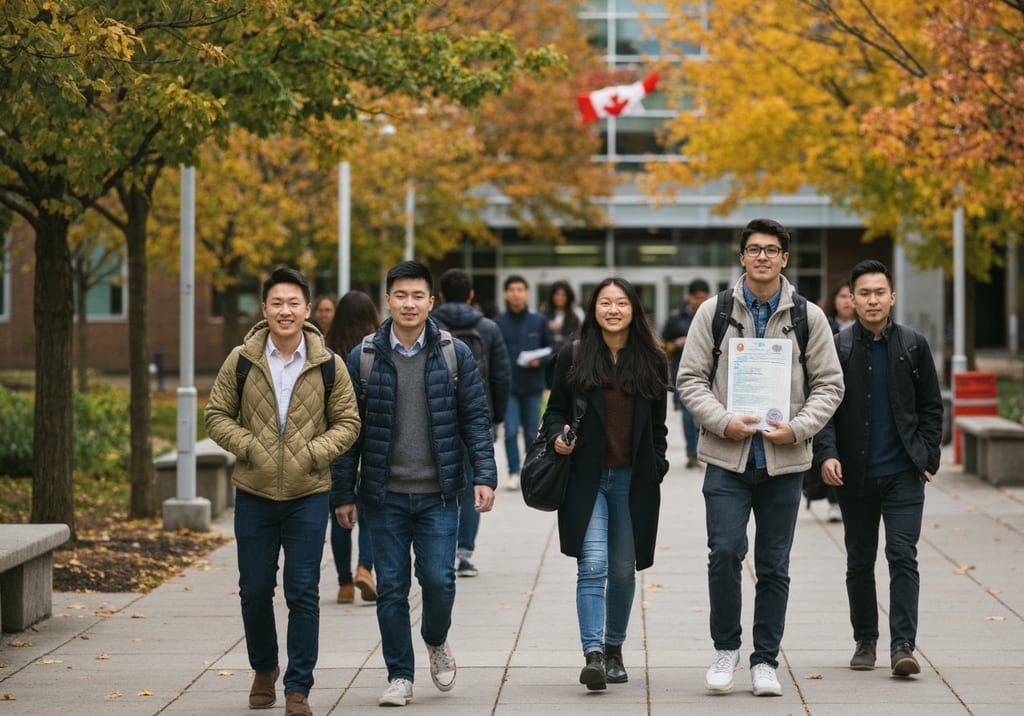
Canada has long been one of the most popular places in the world to study, and for good reason: globally respected universities and colleges, the ability to work while you study, and pathways that can lead from a classroom to permanent residence. If you're new to all of this, the process can feel overwhelming. This guide walks you through how studying in Canada actually works, from the first acceptance letter to what happens after you graduate.
What a study permit is (and who needs one)
Most international students need a study permit to study at a Canadian school. It's not a visa in itself; it's the document that lets you stay in Canada to study a specific program at a specific school. Depending on your country of citizenship, you may also be issued an entry document alongside it: a temporary resident visa (TRV) or an electronic travel authorization (eTA). The official IRCC website has a tool that tells you which one applies to you.
A few people don't need a study permit, mainly those enrolled in short programs of six months or less, or minor children already in Canada in certain situations. But if your program is longer than six months, assume you need one. Even for a short course, getting a permit anyway is often smart, because it keeps your options open if you decide to extend your studies.
The school you attend matters too. To qualify for a study permit and for most of the benefits that come later, your institution must be a Designated Learning Institution (DLI) — a school the government has approved to host international students. Every DLI has a number, and you'll need it on your application. Always confirm a school's DLI status on the official list before you pay any tuition.
Getting accepted and applying for your permit
The process generally runs in this order:
- Get a letter of acceptance from a DLI. You apply directly to the school, meet their admission and language requirements, and receive an official acceptance letter.
- Gather your documents. This usually includes your acceptance letter, proof that you can pay for tuition and living costs, a valid passport, and sometimes a letter explaining your study plans. In recent years many applicants also need a provincial or territorial attestation letter (PAL/TAL), which the province issues to confirm your spot counts within its allocation. Check the current requirement on the official IRCC website, since this is an area that changes.
- Prove your funds. You'll need to show you can cover tuition plus living expenses for yourself (and any family coming with you). The minimum amount is set by the government and is updated periodically, so confirm the current figure rather than relying on an old number you saw online.
- Apply, usually online. A government processing fee applies, and biometrics (fingerprints and a photo) are typically required. Some applicants also complete a medical exam.
Be honest and thorough. Misrepresenting anything on an immigration application can lead to a refusal and a multi-year ban. Apply early, too — processing times vary by country and season, and you want your permit before your program starts.
Working while you study
One of the biggest draws of studying in Canada is the ability to work. If your study permit allows it and you're a full-time student in an eligible program at a DLI, you can generally work on campus without a separate work permit. You may also be able to work off campus up to a capped number of hours per week during the academic term, and full-time during scheduled breaks like summer or winter holidays. The off-campus hour cap has changed in recent years, so check the current limit before you count on a number.
Many programs also include co-op or internship placements. If work experience is a required part of your program, you'll usually need a separate co-op work permit, which your school can help you arrange. Your spouse or common-law partner may also qualify for a work permit in some cases.
After graduation: the PGWP and beyond
When you finish an eligible program, you may qualify for a Post-Graduation Work Permit (PGWP) — an open work permit that lets you work for almost any employer in Canada. This is one of the most valuable things a Canadian education offers, because Canadian work experience strengthens many permanent residence applications. A PGWP is generally issued only once in your lifetime, so think about timing. Eligibility rules, including which programs and fields qualify, have tightened recently, so verify the current criteria on the official IRCC website before assuming your program counts.
From there, many graduates pursue permanent residence. Express Entry and various Provincial Nominee Programs reward Canadian education and work experience, though cut-off scores vary from draw to draw and are never fixed. If you eventually become a permanent resident and then a citizen, citizenship requires 1,095 days of physical presence in Canada within the relevant period — and time spent as a student can sometimes count partially toward that.
A practical checklist
- Confirm your school is on the DLI list before paying tuition.
- Check whether you need a PAL/TAL for your province.
- Budget realistically for tuition plus living costs, and keep proof of funds.
- Apply for your study permit early, with honest, complete documents.
- Understand your work limits before taking a job, and track your hours.
- Plan your PGWP timing carefully, since you only get one.
Rules and amounts in this area change often. Treat this guide as your map, but always confirm the specific numbers, fees, and current requirements on the official IRCC website before you act.