
Two documents do most of the work in a Canadian citizenship by descent claim
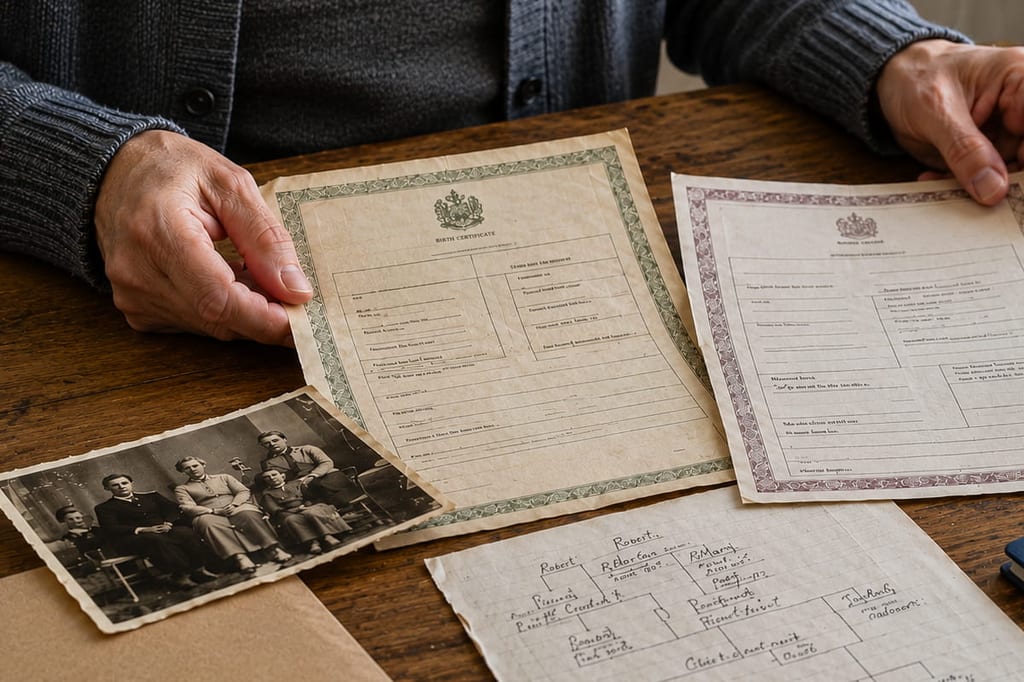
When applying for Canadian citizenship by descent, not all documents are equally important in supporting a claim. Two key records, birth records and marriage certificates, carry significant weight in establishing a chain of parent-child relationships and preserving Canadian citizenship. These documents serve multiple purposes, including establishing facts, anchoring individuals to specific locations, and pointing to the next necessary record.
The importance of these documents is rooted in the requirement to prove an unbroken line of parent-child relationships connecting a Canadian ancestor to the applicant. Every generation in this line must be documented, making birth records and marriage certificates crucial in building a strong citizenship claim. Historically, various documents have been accepted as proof of citizenship, but recent changes to the documentary standard have tightened the requirements. As of June 2026, Immigration, Refugees and Citizenship Canada (IRCC) only accepts documents from the original authority, such as civil registries, vital statistics offices, or archives.
In terms of specific mechanics, birth records, including baptismal records, are essential in proving the parent-child link and Canadian citizenship. For Canadian-born ancestors, a provincial or territorial birth certificate can serve as proof of citizenship, with some exceptions, such as children born to foreign diplomats. Long-form birth certificates are preferred, as they typically include the parents' names and place of birth, which can be used as search terms for the next record in the chain. IRCC also accepts alternative documents, such as certified baptismal records, hospital records, and census records, in cases where a civil birth record does not exist.
According to Immigration, Refugees and Citizenship Canada, "documents must now come from the original authority" in order to be accepted. Marriage certificates are also vital, as they can serve as proof of a legal name change, particularly in cases where a woman's name has changed due to marriage. Civil records from vital statistics offices are given more weight than church marriage records that were not registered with the state.
These changes to the documentary standard affect various groups, including individuals with Canadian ancestors, particularly those whose claims require older records. Applicants from Quebec are also impacted, as IRCC only accepts birth and marriage certificates issued by Quebec offices after January 1, 1994. For those with older records, it may be necessary to obtain certified reproductions from Bibliothèque et Archives nationales du Québec (BAnQ) or have the documents reissued by the Directeur de l'état civil (DEC).
For individuals considering applying for Canadian citizenship by descent, the next step is to gather the necessary documents, including birth records and marriage certificates, and ensure they meet the new documentary standard. It is essential to verify the requirements and accepted documents on the official Canada.ca website to build a strong citizenship claim. By understanding the importance of these key documents and the updated requirements, applicants can navigate the process more effectively and increase their chances of a successful claim.
Original reporting: CIC News