
Where Americans are finding the documents needed to prove Canadian…
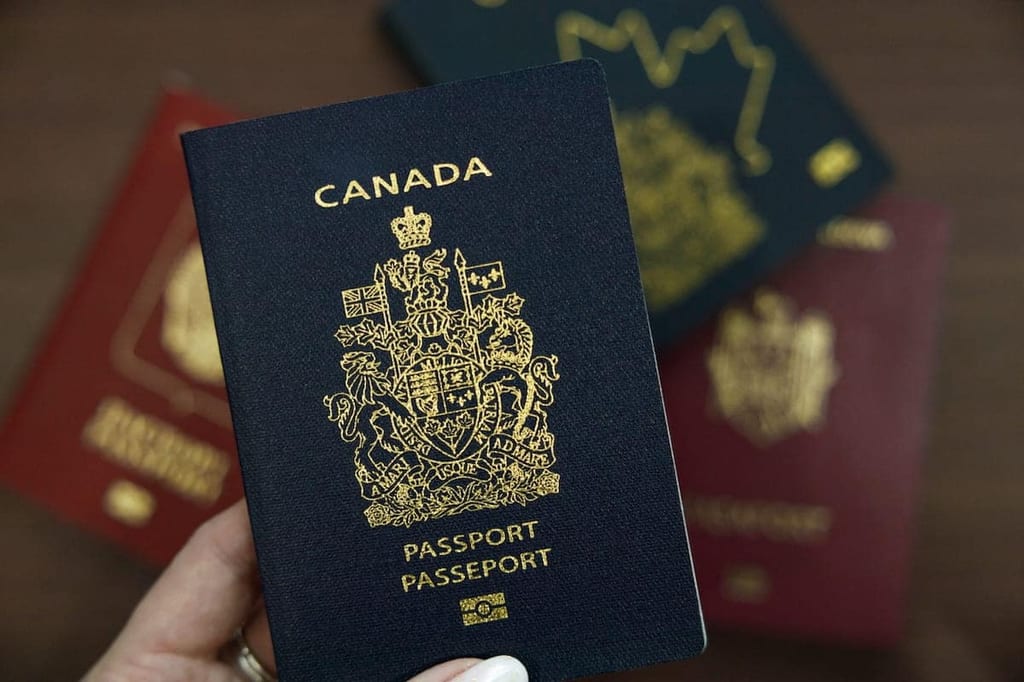
Thousands of Americans are requesting vital records from Canadian provincial offices this spring to prove eligibility for citizenship by descent, following Canada's December 2025 elimination of the generational limit on inherited citizenship. The policy change made millions of Americans with Canadian ancestry eligible to obtain Canadian passports for the first time.
Previously, Canadian citizenship by descent was limited to the first generation born outside Canada. Under the new rules, anyone who can document a continuous line of descent from a Canadian-born ancestor can now apply, regardless of how many generations removed they are. This has triggered a surge in document requests from Americans tracing family connections to Canada.
To obtain Canadian citizenship by descent, applicants must first apply for a proof of citizenship certificate from Immigration, Refugees and Citizenship Canada (IRCC). That application requires official documents proving the applicant's continuous line of descent from a Canadian ancestor: birth certificates, marriage certificates, and in some cases baptismal records or death certificates for every generation in the chain. The starting point is typically a birth certificate showing that an ancestor was born in Canada.
"Since Canada has no national vital statistics office, Americans will often need to request documents from different regional institutions depending on where in Canada their ancestor was born," as reported by CIC News.
Canadian vital records are held provincially, not nationally. Recent records are held by each province's vital statistics office, while older records — typically more than 100 years old — are held by provincial archives. In Ontario, ServiceOntario holds birth records from 1920 forward, marriage records from 1945 forward, and death records from 1955 forward. British Columbia's Vital Statistics Agency holds records from 1872, when province-wide registration began. Manitoba's Vital Statistics Branch in Winnipeg holds records from 1882, with substantially complete registration by 1930. Alberta Registries holds records from 1906, when Alberta became a province, though registration began in 1898.
Quebec presents a unique case: the Directeur de l'état civil holds records from 1994 forward, when centralized civil registration began. Post-1900 records are confidential and restricted to the named person, immediate family, or legal representatives. Saskatchewan offers historical birth indexes from 1880–1907 searchable online through eHealth Saskatchewan. New Brunswick's Service New Brunswick holds records from January 1, 1888, when province-wide registration began, with some delayed registrations back to 1810.
Americans applying for citizenship by descent should identify which province their Canadian ancestor was born in, then contact that province's vital statistics office or archives depending on the record date. Request certified copies of all birth, marriage, and death certificates needed to establish the unbroken chain of descent. Processing times vary by province, so applicants should submit document requests well before filing their IRCC citizenship application.
Source: CIC News — published 2026-05-19.