
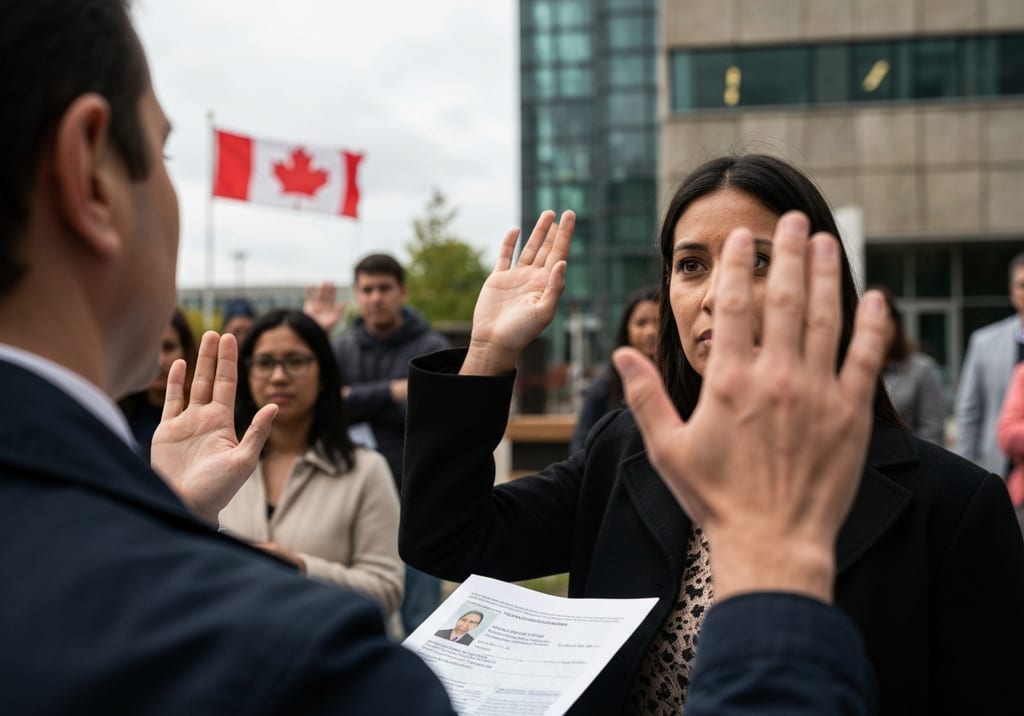
Why older Americans are among the most active claimants of Canadian citizenship by descent
A growing number of older Americans are quietly claiming Canadian citizenship. According to a report by CIC News published on July 16, 2026, retirement-aged people in the United States are looking north to secure a second passport. This interest is tied to recent legislative changes that corrected decades-old restrictions on how citizenship is passed down through generations.
Most of these applicants are not planning to pack up their lives and move permanently. Instead, they want options. Having a second citizenship provides a reliable safety net, simplifies cross-border living, and establishes a lasting legacy for children and grandchildren. Because both Canada and the United States permit dual nationality, eligible applicants do not have to choose between their American identity and their Canadian heritage.
Understanding the rules of Citizenship by descent is the first step for any family exploring these options. The process involves confirming a status that, legally speaking, the applicant may have held since birth without realizing it.
What changed with Canadian citizenship by descent under Bill C-3?
The rules governing Canadian citizenship changed on December 15, 2025, when Bill C-3 took effect. Before this law was implemented, Canada enforced a strict first-generation limit on citizenship by descent. This meant that if a person was born outside Canada to a Canadian parent who was also born outside Canada, they could not inherit citizenship. The rule left many families cut off from their heritage, creating a category of individuals often called "Lost Canadians."
This limit was put in place back in 2009 by policymakers who wanted to protect the value of citizenship by ensuring citizens had a physical connection to the country. However, it ended up penalizing families who maintained deep cultural and emotional ties to Canada despite living across the border. After years of legal challenges, including a landmark Ontario Superior Court ruling that found the limit unconstitutional, the government introduced Bill C-3 to correct the system.
With the passage of Bill C-3, this generational limit was dismantled for individuals born before the law's effective date. Under the canadian citizenship new eligibility rules, anyone born before December 15, 2025, who can trace an unbroken line of descent to a Canadian-born ancestor is eligible to claim their status.
There is a distinct legal difference here that many people miss. When filing a canadian citizenship application, you are not asking the Canadian government to grant you a new status. Instead, you are asking Immigration, Refugees, and Citizenship Canada (IRCC) to recognize a status you have technically held since birth. The goal of the application is to receive a formal certificate that proves this status.
Why retirement-age Americans are seeking a Canadian citizenship certificate
For older Americans, holding a canadian citizenship certificate offers a unique set of practical advantages that align well with retirement planning.
First, a Canadian citizen has an absolute, constitutionally protected right to enter, live, work, and study in Canada. Unlike temporary visas or permanent residency, citizenship never expires, and there are no residency obligations to maintain it. A permanent resident must meet strict physical presence requirements, as detailed in our guide on maintaining PR status and the residency obligation. A citizen, however, can live in the United States for decades, never set foot in Canada, and still walk across the border at any time with their rights fully intact.
This flexibility makes dual citizenship highly attractive for retirees who want to split their time between the two countries. A dual citizen can easily spend summers in a Canadian province and winters in the American Sunbelt without worrying about visitor visa limits or border officials questioning their intentions. In my experience, many retirees do not actually want to move to Canada full-time—the winters are simply too harsh for aging joints—but they love the idea of spending summers in Muskoka, the Laurentians, or the Maritimes without watching the calendar or worrying about a six-month tourist limit.
Additionally, Canadian citizens are exempt from the federal ban on foreign home buyers. While other Americans face strict legal barriers when trying to purchase residential property in Canada, citizens can buy real estate anywhere in the country. However, buyers should remain aware of local tax laws. Certain provinces, such as British Columbia, impose vacancy taxes on homes that sit empty for most of the year. If a dual citizen keeps a Canadian property vacant while living primarily in the US, they may still face these local tax assessments.
Passing the legacy down: how the claim extends to descendants
For a lot of retirees, this process is not really about their own travel plans. It is about the opportunities they can pass down to their families. Once an older American successfully claims their citizenship, they open a pathway for their adult children and grandchildren to do the same.
A Canadian passport provides younger generations with access to global opportunities, including working holiday programs in Europe, Asia, and Australia. These programs, which allow young adults to live and work abroad, typically have age limits that cap out in the mid-thirties. Securing Canadian citizenship early gives young adults access to these international arrangements.
However, there is a critical distinction regarding children born after the new law took effect. For any child born outside Canada on or after December 15, 2025, to a parent who was also born abroad, the parent must demonstrate a substantial connection to Canada. This is measured as at least 1,095 days (about three years) of physical presence in Canada before the child's birth. Children born before December 15, 2025, are not subject to this physical presence requirement. This compromise was designed to prevent endless generations of citizens who have never set foot in the country from passing down status, while still being fair to those who grew up under the old rules.
It is also worth noting that family relationships have specific limits under Canadian law. For instance, marriage to a Canadian citizen by descent does not grant you citizenship. A non-Canadian spouse must still go through the standard immigration process to obtain permanent status, even if their partner successfully claims citizenship by descent.
Understanding the Canadian citizenship requirements in 2026
Getting your application approved comes down to one thing: paperwork. To successfully claim citizenship, applicants must satisfy the specific canadian citizenship requirements 2026 set by IRCC. The process is entirely document-driven, requiring clear, official proof of your family lineage.
The primary canadian citizenship requirement is establishing an unbroken paper trail from you to your Canadian-born ancestor. Instead of a simple checklist, this means gathering a complete set of birth certificates, marriage certificates, or death certificates for your parents and grandparents, tracing all the way back to the ancestor born in Canada. You will also need your own official birth certificate listing your parents' names, and proof of your ancestor's Canadian citizenship, such as an original birth certificate from a Canadian province or territory.
Gathering these documents can sometimes present challenges, especially when dealing with records that are several decades old. If an ancestor's birth certificate is missing or was never registered, applicants must look for alternative historical records. IRCC has specific guidelines on what to do if your ancestor's birth certificate does not exist, which allows for the submission of secondary evidence like baptismal certificates, old census records, or school records.
Dealing with provincial archives can be incredibly slow. For example, ordering a historical birth record from Ontario or Quebec can take several months of back-and-forth communication, especially if there are spelling discrepancies or name changes due to marriage that need to be reconciled with legal name-change certificates.
Before beginning the formal application, it is highly recommended to verify your ancestor's status. You can learn how to confirm with IRCC whether your ancestor was a Canadian citizen before submitting your complete application package.
The practical realities: taxes, healthcare, and cost of living
Before you spend time and money on this process, you need to look at the practical financial and administrative realities of holding dual citizenship.
Tax obligations
A common concern is whether acquiring a second citizenship will result in a double tax burden. Fortunately, claiming Canadian citizenship does not change your relationship with the US Internal Revenue Service (IRS). The United States taxes its citizens on their worldwide income, regardless of where they live. Therefore, an American citizen living in the US will continue to file their taxes exactly as they do now.
If you choose to live in Canada or earn income there, you will be subject to Canadian tax laws. However, the Canada-US tax treaty and foreign tax credits exist specifically to prevent double taxation on the same income. Canada taxes based on physical residency, not citizenship, which is a major relief for dual citizens who choose to remain in the US. For detailed financial planning, consulting a cross-border tax specialist is always advisable.
Healthcare access
A common misconception is that holding a Canadian passport grants immediate access to Canada's publicly funded healthcare system. In Canada, healthcare is managed by individual provinces and territories, and eligibility is strictly tied to physical residency, not citizenship.
If you receive your citizenship certificate but continue to live in the United States, you cannot access Canadian public healthcare. To qualify, you must move to Canada and establish a permanent residence. Most provinces, including Ontario, British Columbia, and Quebec, require a waiting period of roughly three months before healthcare coverage begins. Additionally, US Medicare does not cover medical care received outside the United States, which is an important consideration for retirees planning extended stays in Canada.
Cost of living
Comparing the cost of living between the US and Canada depends heavily on your specific location. While some Canadian cities have high housing costs, the exchange rate can provide a significant advantage. For retirees whose savings, pensions, or investments are denominated in US dollars, spending those dollars in Canada often yields substantial purchasing power due to the strength of the American dollar relative to the Canadian dollar.
Navigating the Canadian citizenship processing time and next steps
Once you have gathered your documents and submitted your application, you must prepare for the wait. The canadian citizenship processing time for proof of citizenship applications can be lengthy. Historically, processing times have ranged from several months to over a year, depending on the complexity of the ancestral records and the volume of applications received by IRCC.
The government is notoriously slow with paper-based citizenship proof applications, and the influx of new applicants under Bill C-3 has only added to the backlog. Applicants can monitor their progress by learning how to check your Canada immigration application status online through the IRCC portal.
Given the complexity of gathering historical documents and navigating federal immigration portals, some applicants choose to seek professional assistance. If you are considering professional help, it is wise to review the questions to ask before hiring an immigration lawyer. Ensure that any consultant you hire is licensed by the College of Immigration and Citizenship Consultants (CICC) or is a lawyer in good standing with a provincial law society.
Once IRCC approves your application, they will issue your official citizenship certificate. This document is your permanent proof of status. With this certificate in hand, you can take the final step of getting your first Canadian passport, allowing you to travel freely across the border and enjoy the full benefits of your dual heritage.
For older Americans with deep family connections to Canada, securing canadian citizenship by descent is a practical way to honor their family history while opening up new options for the future.
Official current rules are at canada.ca/immigration; this guide is independent reference content.