
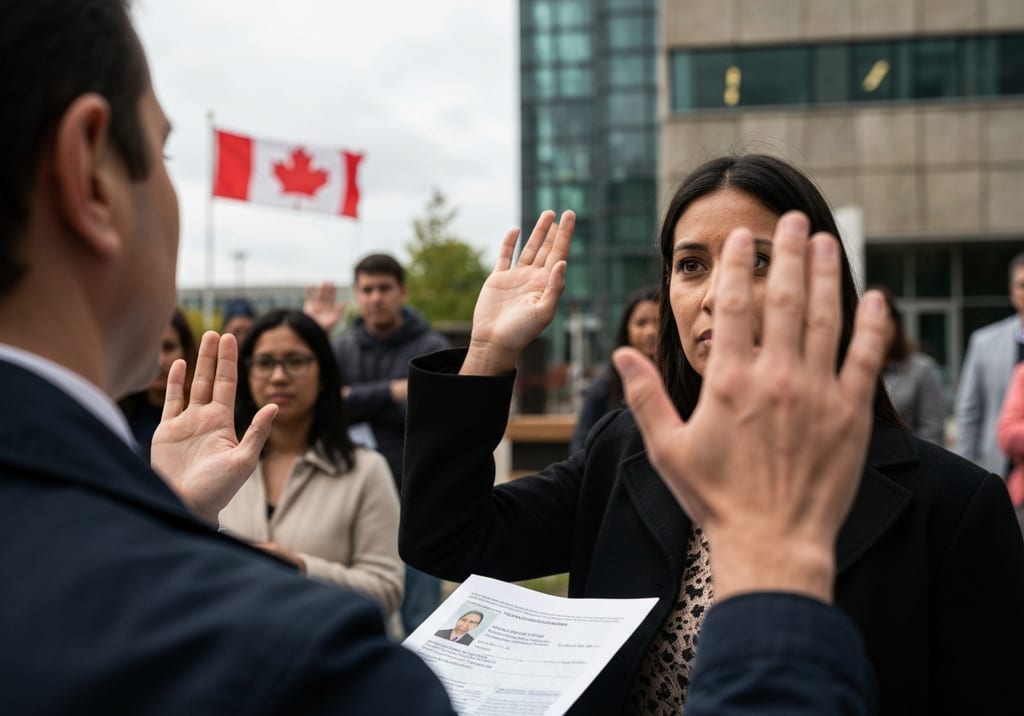
1,095 days physical presence rule for Canadian citizenship — how to count it
The 1,095-day physical presence requirement is the single biggest eligibility gate for Canadian citizenship, and it's where most applicants either miscalculate or pad their timeline with unnecessary caution. The rule sounds simple — you need to be physically present in Canada for at least 1,095 days during the five years immediately before you apply — but the mechanics of counting those days trip up thousands of applicants every year.
This guide walks through what counts as a day of physical presence, how pre-PR time factors in, and the common pitfalls that delay or sink applications.
What the 1,095-day rule actually means
The citizenship eligibility requirement is built around two time windows: a five-year eligibility period and a 1,095-day presence threshold within that period.
The five-year eligibility period is the five calendar years immediately before the date you sign your citizenship application. IRCC counts backward from that signature date — not the date you mail the application, not the date they receive it, but the date you sign the form.
Within that five-year window, you must have been physically present in Canada for at least 1,095 days. That's three full calendar years, but it doesn't have to be continuous. You can leave and return. You can have gaps. The only requirement is that the total adds up to 1,095 or more.
The gotcha most applicants hit is conflating the two numbers. You don't need to live in Canada for five years — you need 1,095 days out of the most recent five years. That leaves room for nearly two full years of absence, though in practice most successful applicants are closer to 1,200–1,400 days of presence because they want margin for error.
What counts as a day of physical presence
A day of physical presence is any day you were physically in Canada at any point during the 24-hour period from midnight to midnight Eastern Time. IRCC's rule is generous in one sense — you don't need to be in Canada for the full 24 hours. If you land at Pearson at 11:45 PM, that day counts. If you leave for the U.S. at 12:15 AM, the previous day still counts.
The flip side: partial days don't stack. If you cross into the U.S. for a few hours and return the same calendar day, that day counts as one day of presence, not zero — but you don't get credit for "more" presence because you were there twice.
Arrival and departure days both count as full days of presence if you were in Canada at any point. The common mistake is excluding the departure day because you left that evening. Don't. IRCC counts it.
Days spent entirely outside Canada — even if you were one timezone away — count as zero. Business travelers who live near the border and work in the U.S. need to track this carefully. A pattern of Monday-to-Friday absences adds up faster than most people expect.
Do days as a temporary resident count toward citizenship?
Yes, but at half value and subject to a cap. This is one of the least-understood parts of the rule and it matters most to people who came to Canada on a work permit or study permit before becoming a permanent resident.
For every day you were physically present in Canada as a temporary resident (work permit holder, study permit holder, visitor with valid status), you get 0.5 days of credit toward the 1,095-day requirement. The maximum credit you can claim is 365 days — meaning up to two full years of pre-PR time can contribute one year toward citizenship.
The math works like this: if you were in Canada on a work permit for 800 days before you landed as a PR, you can claim 400 days of credit (800 ÷ 2). If you were here for 1,000 days as a temporary resident, you still cap at 365 days of credit.
This half-day credit rule is why some Express Entry applicants who worked in Canada for a year or two before landing PR can apply for citizenship sooner than newcomers who arrived directly as permanent residents. It's a real advantage, but only if you count it correctly.
Days spent in Canada without legal status — overstays, implied status that later gets rejected, time between permit expiry and restoration — do not count. IRCC will verify your status history against their own records. If the dates don't line up, the application gets returned or refused.
How to calculate your 1,095 days without miscounting
IRCC provides a residence calculator tool that walks you through every absence and generates a day count. It's clunky, but it's the same logic the processing officer will use, so your final count should match what the calculator produces.
The tool asks for every trip outside Canada during your five-year eligibility period — departure date, return date, destination. You'll need your passport stamps, boarding passes, entry/exit records if you have them, and your PR card or Confirmation of Permanent Residence (COPR) to establish your landing date.
Common pitfalls:
Forgetting short trips is the first one. Weekend visits to the U.S., day trips to Niagara Falls from the Canadian side (where you cross and return the same day), even a few hours in Buffalo for shopping — all of these count as absences if you left Canadian territory. The residence calculator counts each absence individually.
Rounding dates doesn't work. The calculator wants exact dates. "Sometime in July 2023" doesn't cut it. If you don't have records, reconstruct the trip from credit card statements, hotel bookings, or email confirmations.
Misunderstanding the five-year window trips people up constantly. The window is a rolling period. If you apply on June 15, 2026, your eligibility period is June 15, 2021, to June 15, 2026. Days before June 15, 2021, don't count, even if you were a PR at the time.
Not accounting for time zone can cost you days. IRCC uses Eastern Time for the midnight cutoff. If you flew from Vancouver to Tokyo and crossed the date line, the calendar day you left Canada still counts as presence if you were in Canada at any point that day in ET.
Most applicants build a margin of 50–100 extra days before applying. If your calculator shows exactly 1,095, a single disputed absence (maybe IRCC's records show you left a day earlier than you remember) can sink the application. Waiting until you hit 1,150 or 1,200 is safer.
The citizenship application guide covers the step-by-step filing process once you've confirmed your day count.
What happens if you leave Canada during the eligibility period
Leaving Canada during the five-year eligibility period is normal and allowed. The rule doesn't require continuous residence — it requires a cumulative total of 1,095 days. You can take vacations, visit family abroad, travel for work, or spend months outside Canada as long as your total presence days still add up.
Short trips (a week, two weeks, even a month) are straightforward. You document the absence in the residence calculator, subtract those days from your total, and continue. The application form asks you to list every absence, but IRCC doesn't scrutinize a two-week vacation to Europe the same way they scrutinize a six-month gap.
Extended absences — anything longer than six months in a single stretch — trigger closer review. IRCC wants to see that you maintained residential ties to Canada (kept a home, kept a job, kept family here) and that the absence was temporary. A one-year work assignment abroad while your family stayed in Toronto is defensible. A one-year "gap year" backpacking with no Canadian ties is harder to explain, and depending on the circumstances, IRCC may question whether you intended to keep Canada as your primary residence.
The residence requirement is separate from the PR card renewal requirement, but the two overlap. If you've been outside Canada so much that you're at risk of losing PR status (fewer than 730 days of presence in the past five years), you're also unlikely to meet the citizenship requirement. Fix the PR residency obligation first.
Cross-border commuters — PRs who live in Canada but work in the U.S. and cross daily — need to count carefully. Each day you cross into the U.S. for work and return the same evening still counts as a full day of presence (you were in Canada at some point that day). But if your work pattern involves overnight stays in the U.S. multiple nights per week, those nights are absences. Four nights a week in the U.S. over five years is more than 1,000 days of absence, leaving you with fewer than 730 days of presence — below the citizenship threshold and potentially below the PR residency obligation.
When you can apply — and when you shouldn't
You're eligible to apply for citizenship as soon as you meet the 1,095-day threshold within the five-year window. The earliest possible application date for most permanent residents is roughly three years after landing, assuming you've been in Canada continuously and you have no pre-PR credit.
If you have pre-PR time that counts at half value, you can apply sooner. Example: you were in Canada on a work permit for two years (730 days) before landing PR. That gives you 365 days of credit. You need an additional 730 days as a PR (1,095 total minus the 365 credit). If you stay in Canada continuously after landing, you can apply two years after becoming a PR instead of three.
Applying at exactly 1,095 days is risky. Here's why.
IRCC's records may differ from yours. Border entry/exit data, especially for land crossings into the U.S., is not always captured the way you remember it. If IRCC's system shows you left Canada one day earlier than your records indicate, and that flips your total to 1,094 days, the application gets refused.
Processing officers round conservatively. If there's ambiguity about a date, they'll interpret it in the government's favor, not yours.
You can't add days after you apply. The eligibility period is locked to the date you sign the application. If you apply on day 1,095 and IRCC later determines you were one day short, you can't say "but I've been here another six months since then." You have to withdraw, wait, and reapply.
The safe practice is to wait until you have 1,150–1,200 days, or until you're confident you have a 60–90 day margin over the minimum. The application fee is CAD $630 for an adult as of 2026. Paying it twice because you applied too early is an expensive mistake.
One more timing consideration: the citizenship test and interview happen months after you apply, and you must still be a PR in good standing when you take the oath. If you're planning to leave Canada for an extended period after applying — say, a six-month work assignment abroad — make sure that absence won't put your PR status at risk. IRCC has refused citizenship to applicants who lost PR status while their citizenship application was in progress.
Common edge cases and traps
What if you became a PR through a Provincial Nominee Program and you've since moved to a different province? The 1,095-day rule doesn't care which province you lived in. PNP nominees have the same physical presence requirement as everyone else. The only PNP-related consideration is whether you're still meeting any post-landing conditions your nomination imposed (some PNPs require you to stay in the nominating province for a period after landing), but that's a PR obligation, not a citizenship one.
What if you traveled on a non-Canadian passport during your eligibility period? You still need to declare every absence, regardless of which passport you used. IRCC shares entry/exit data with the U.S. and other countries. If you left Canada on your home-country passport and didn't declare the trip, the discrepancy will surface during processing.
What if you can't remember an exact departure or return date from four years ago? Reconstruct it. Check your email for flight confirmations, look at credit card statements for charges in the destination country, check social media posts with location tags. If you genuinely can't pin down the date, estimate conservatively (assume you left earlier and returned later than you think) and note in the application that the date is approximate. IRCC prefers an honest approximation to a guess presented as fact.
What if you spent time in Canada as a refugee claimant before becoming a PR? Days spent in Canada while your refugee claim was being processed count as temporary resident time (half-day credit, 365-day cap) if you had valid temporary resident status during that period. If you were in Canada without status while waiting for a hearing, those days don't count.
For applicants who became citizens by descent under the recent Bill C-3 changes, the 1,095-day rule doesn't apply — they're citizens by birth or descent, not by naturalization. But if you're a permanent resident applying for citizenship by naturalization, the physical presence requirement is non-negotiable.
The residence calculator will walk you through the count step by step. Once you're confident you meet the threshold with margin to spare, the step-by-step citizenship application guide covers the rest of the process — documents, fees, test prep, and what happens after you apply.
Official current rules are at canada.ca/citizenship; this guide is independent reference content.