
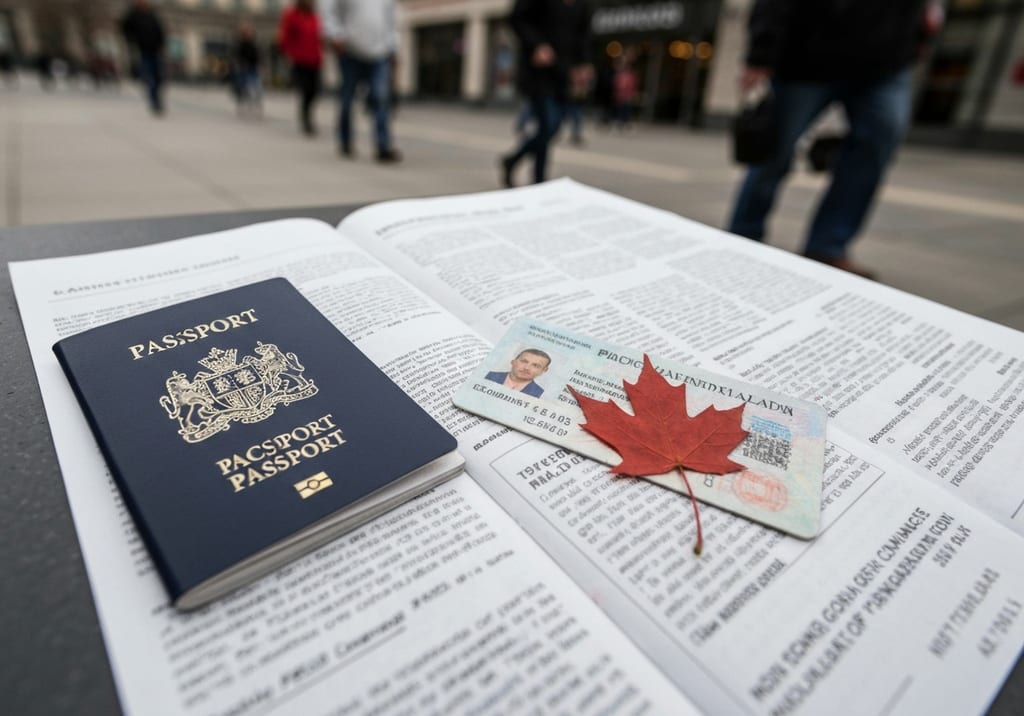
The Permanent Resident Travel Document: A Guide
The Permanent Resident Travel Document (PRTD) is a document that allows permanent residents of Canada to return to Canada after traveling abroad. It's usually required when a permanent resident's PR card is expired, lost, or stolen, and they need to re-enter Canada. I've seen many cases where a PRTD has been a lifesaver for individuals who need to travel urgently.
introduction to the prtD
A PRTD is issued by Immigration, Refugees and Citizenship Canada (IRCC) and enables permanent residents to re-enter Canada. To be eligible, you must meet certain requirements, including having a valid PR card and meeting the residency obligation. You can check your eligibility on the IRCC website. For instance, I recall a situation where an individual's PR card was stolen while traveling abroad, and they had to apply for a PRTD to return to Canada.
eligibility for a prtD
To apply for a PRTD, you need to be a permanent resident of Canada and meet specific requirements. These include having a valid PR card, meeting the residency obligation, and not being under a removal order. The residency obligation requires you to be physically present in Canada for at least 730 days within a five-year period. You can find more information on the IRCC website.
applying for a prtD
The application process for a PRTD involves gathering the required documents, including a valid passport, proof of permanent residence, and proof of identity. Then, you need to fill out the application form and submit it to IRCC. The application form can be found on the IRCC website. It's essential to ensure that all documents are accurate and complete to avoid delays in the application process.
using a prtD for travel
Once you've obtained a PRTD, you can use it to travel outside Canada and return. However, it's crucial to note that a PRTD is only valid for a single entry into Canada. If you plan to travel again, you'll need to apply for a new PRTD. You can find more information on using a PRTD for travel on the IRCC website. For example, if you're traveling to the United States and then returning to Canada, you'll need to ensure that your PRTD is valid for the entire duration of your trip.
maintaining pr status
To maintain your PR status, you need to meet the residency obligation. This requires you to be physically present in Canada for at least 730 days within a five-year period. You can find more information on maintaining PR status on our PR maintenance page. It's also important to note that meeting the residency obligation is crucial to maintaining your PR status and avoiding any potential issues when applying for citizenship.
pr card renewal
If your PR card is expired or about to expire, you'll need to renew it. You can find more information on PR card renewal on our PR card renewal page. It's essential to renew your PR card on time to avoid any delays or issues when traveling.
You can visit our PR maintenance page or check out other articles on our website, such as The PR Portal Explained: What It Is and How to Use It and Confirmation of Permanent Residence (COPR): What It Is and Your Next Steps for more information on PR maintenance, PR card renewal, and other related topics.
Official current rules are at canada.ca/immigration; this guide is independent reference content.